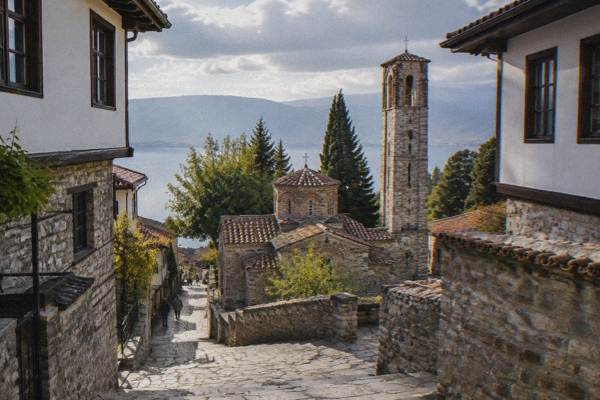
Ohrid In Spring: Blossoms, Cool Water And Quiet Streets
Spring brings mild air, blooming trees and short queues to Ohrid, on the shore of Lake Ohrid in North Macedonia. Here is what the modelled climate data, museum schedules and boat operators actually say about March, April and May.
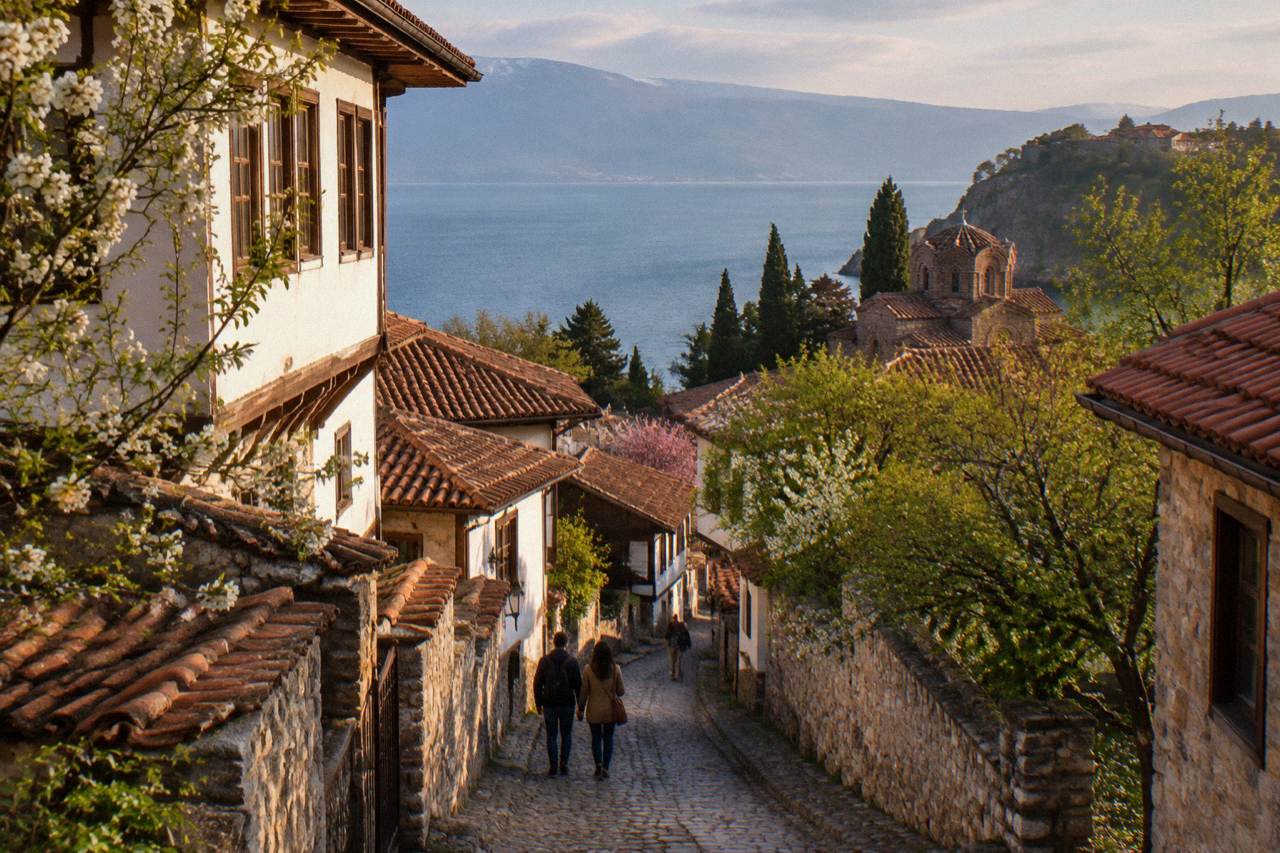
Short answer
Spring in Ohrid runs from about 10 C daytime highs in March to about 19.5 C in May on the modelled 1991-2020 normals, with the lake too cold for swimming until early summer. The museums switch to their summer schedule on 1 May, boats to St Naum resume around May, and the 66th Ohrid Summer Festival does not open until 12 July.
Spring changes Ohrid faster than any other season. The old town, on the shore of Lake Ohrid in North Macedonia at about 693 m above sea level, goes from bare March lanes with 10 C daytime highs to May afternoons that touch 19.5 C on the modelled climate normals, and the museum institute switches its sites to the summer schedule on 1 May. This guide from the Ohrid Travel Guide lays out what the ERA5 reanalysis, the museum's own pages and the boat operators say about the season, so a spring visit can be planned around figures rather than guesswork.
What Is The Weather Like In Ohrid In Spring?
Spring weather in Ohrid, on the modelled ERA5 reanalysis normals for 1991 to 2020 at the old-town grid point, moves from a March average high of about 10.0 C to an April high of about 14.6 C and a May high of about 19.5 C, with nights of about 2.5, 6.3 and 10.8 C respectively, and monthly rainfall of about 80.5, 82.4 and 70.8 mm across the three months.
These are reanalysis figures, computed for a grid cell over the old town, not a weather-station record, so they are stated as about. The pattern they show is a continental climate with a lake influence: March still behaves like winter in the mornings, April swings between the two seasons, and May is properly mild. Rain falls somewhere in the 70 to 82 mm range in each of the three months, which means a spring week should plan for at least a couple of wet hours rather than dry pavement every day. For a month-by-month breakdown across the whole year, see Ohrid weather month by month and the general Ohrid weather guide.
| Month | Mean daily high | Mean daily low | Rainfall |
|---|---|---|---|
| March | 10.0 C | 2.5 C | 80.5 mm |
| April | 14.6 C | 6.3 C | 82.4 mm |
| May | 19.5 C | 10.8 C | 70.8 mm |
Snow is not a spring feature of the town itself, but it matters on the ridges. Galicica National Park, which sits between Lake Ohrid and Lake Prespa with the Magaro peak at 2,254 m, keeps snow on its main road typically from January to March, and heavy snowfall can close it in those months. A spring drive over the ridge toward Lake Prespa is therefore a late-season prospect rather than an early one, and the Lake Prespa day trip guide covers what waits on the other side.

Layering is the practical answer to the numbers. A March day asks for a proper jacket at 2.5 C at dawn and something lighter by mid-afternoon; by May a sweater for the evening is usually enough. The lake keeps the air close to the shore steadier than the inland figures suggest, which is one reason the best time to visit Ohrid discussion treats late spring as a serious contender against July and August.
What To See In Ohrid In Spring: Churches, Museums And The Old Town?
The core sights of Ohrid in spring are the Byzantine churches of the old town, the Ancient Theatre, the Old Bazaar and the museum institute sites, and the key calendar fact is that the institute sites run a winter schedule from 1 October to 30 April and a summer schedule from 1 May to 30 September, with every listed site closed on Mondays.
The switch on 1 May is the single most useful spring date for sightseeing. Before it, Robev Family House on Tsar Samoil St keeps hours of 09:00 to 15:30; after it, the house runs two shifts, 09:00 to 15:30 and 13:30 to 20:00, which puts evening visits back on the table. The Icon Gallery at the Perivleptos complex does the same, moving from a 09:00 to 14:00 winter day to 09:00 to 17:00 in summer. Tickets at the museum institute sites are 150 MKD for foreign visitors, 120 MKD for domestic visitors, with a children and student rate reported at 60 MKD. The National Museum guide and the Old Bazaar guide cover those areas in detail.
| Museum institute site | Winter schedule (1 Oct to 30 Apr) | Summer schedule (1 May to 30 Sep) | Closed |
|---|---|---|---|
| Robev Family House | 09:00 to 15:30 | 09:00 to 15:30 and 13:30 to 20:00 | Monday |
| Icon Gallery (Perivleptos) | 09:00 to 14:00 | 09:00 to 17:00 | Monday |
| Bay of Bones / Museum on Water, Peshtani | 09:00 to 15:30 | 09:00 to 16:30 | Monday |
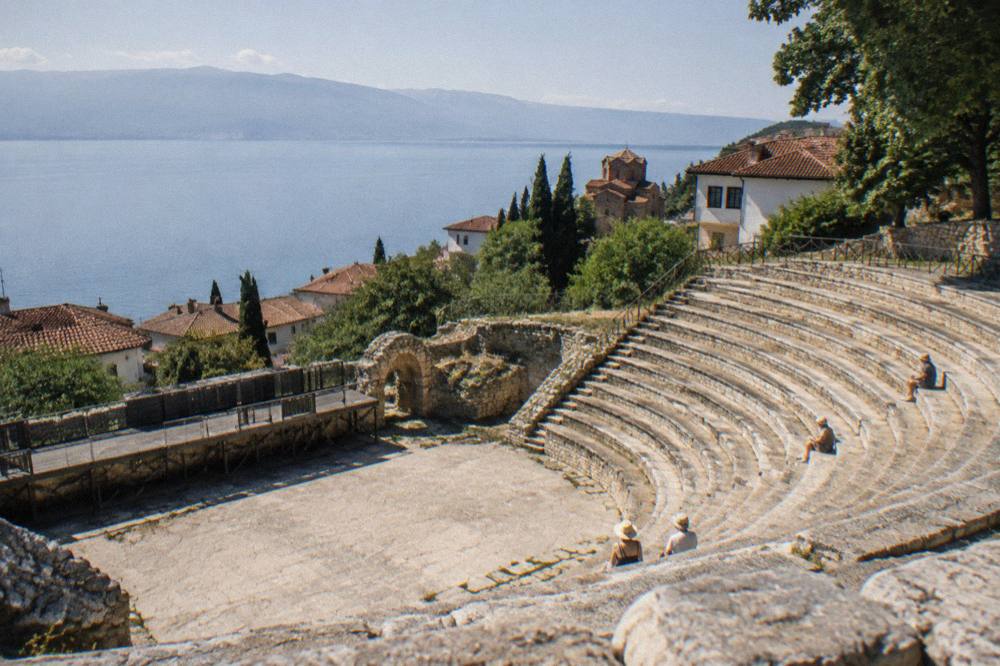
The churches carry their own calendar. The Ancient Theatre, built at the end of the 3rd or start of the 2nd century BC and first excavated in 1935, becomes an event venue in summer: the 66th Ohrid Summer Festival opened there on 12 July 2026 with a gala evening. In spring the theatre and the lanes above it simply belong to walkers. The old town climbs from the lake toward Samuel's Fortress, and the lanes are on foot, which makes a guided walk an efficient way to cover the gradient before the summer heat arrives. The old town area guide maps the district, and a half-day city tour Check availability is the bookable version of the same loop.
The trio above spans the season well: a city walk for the lanes and churches, a boat trip for the water side, and a villages-and-cave-churches excursion for the countryside around the lake. Spring is when all three feel different from their summer versions, mostly because the balance of the day shifts toward walking rather than swimming.
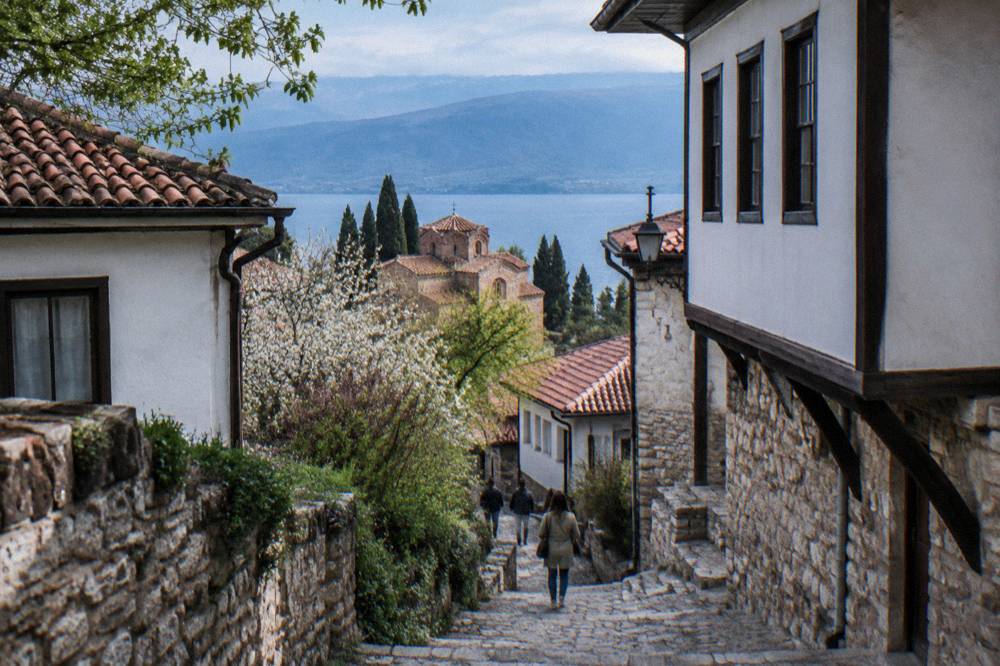
One practical note belongs here. The 2026 resident-only parking regime on old-town streets such as Ilindenska, Kosta Abrash and Car Samoil, in force from summer 2026, means non-resident cars are banned from those lanes and face clamping. Arriving on foot or by taxi and letting the legs do the old town is not just pleasant in spring, it is how the street rules now work. The getting around Ohrid basics and the where to stay in Ohrid guide both help with picking a base that makes the walk-in arrangement easy.
Is Spring Warm Enough For Swimming In Lake Ohrid?
On the modelled lake surface figures, Lake Ohrid in spring is too cold for comfortable swimming for almost the whole season, at about 7.2 C in March, about 10.5 C in April and about 14.9 C in May, with the swimming season generally considered to start around July when the modelled surface temperature reaches about 22.9 C.
Those spring numbers are aggregator modelled values, not gauge measurements, so they carry an about. The direction is unambiguous all the same: March water is frigid, April is brave, and late May begins to appeal only to swimmers used to cold water. The October mean at the lake is 14.3 C on the UHMR multi-year record, which is the same ballpark as May's modelled figure, and nobody treats October as swimming weather. Anyone whose trip hinges on swimming should read swimming in Lake Ohrid and the Ohrid beaches guide and aim the holiday accordingly, or treat spring as a walking-and-boat season instead.
| Month | Modelled lake surface temperature |
|---|---|
| March | about 7.2 C |
| April | about 10.5 C |
| May | about 14.9 C |
| July | about 22.9 C |
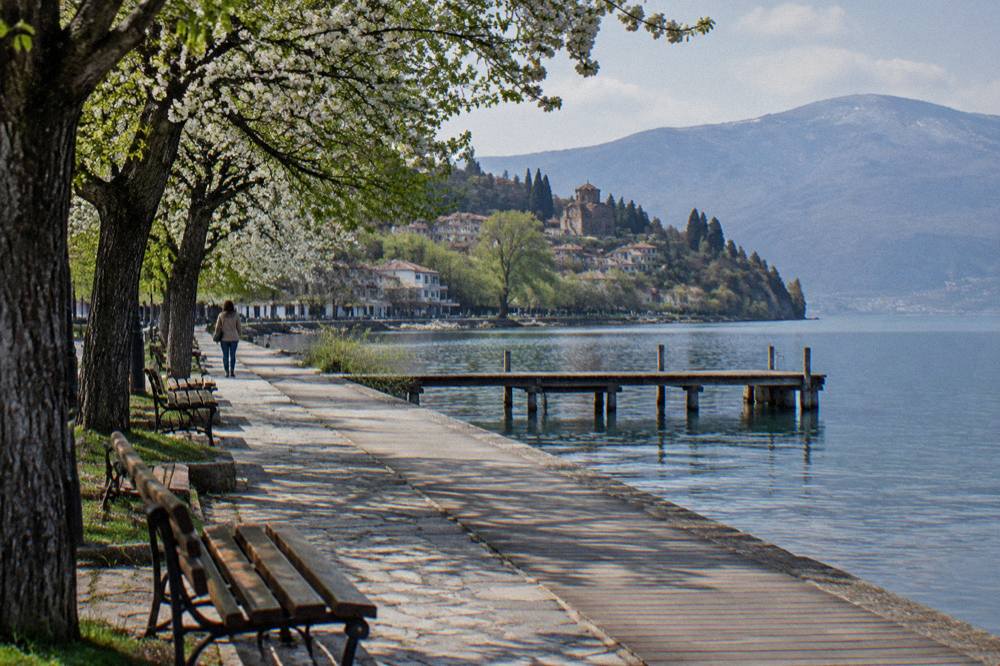
The water that is too cold for swimming is exactly right for looking at. Spring light on a lake at about 693 m above sea level, ringed by mountains still holding snow on the Galicica ridge, gives the shoreline walks a clarity the summer haze softens. Questions about whether the water in Lake Ohrid is clean and whether you can drink the tap water in Ohrid are answered separately, because they are about different water than the lake you would swim in.
To catch that same clarity from the water at dusk, book a sunset lake cruise here.
When Do Boat Trips To St Naum Start Running In Spring?
Boat trips from Ohrid to St Naum and the Bay of Bones generally operate from about May to October, with a reduced or unavailable winter schedule, and the museum institute's Bay of Bones site at Peshtani switches to its summer hours of 09:00 to 16:30 from 1 May, which makes May the month when the full water-side itinerary comes back together.
The operators set their own start dates each year, so the about-May window is a planning frame rather than a timetable. What is fixed is what the sites charge once you arrive: the Bay of Bones entrance is 150 MKD per person on the cruise operator's own list, the St Naum monastery entrance is listed at 150 MKD, and a rowboat ride through the Crn Drim springs at St Naum is quoted at about 5 EUR. The full-day cruise run by Boat Armada from Ohrid port to St Naum takes 7 hours and is priced from 1,200 MKD for an adult and 600 MKD for a child. The Bay of Bones guide and the St Naum monastery guide cover both stops.
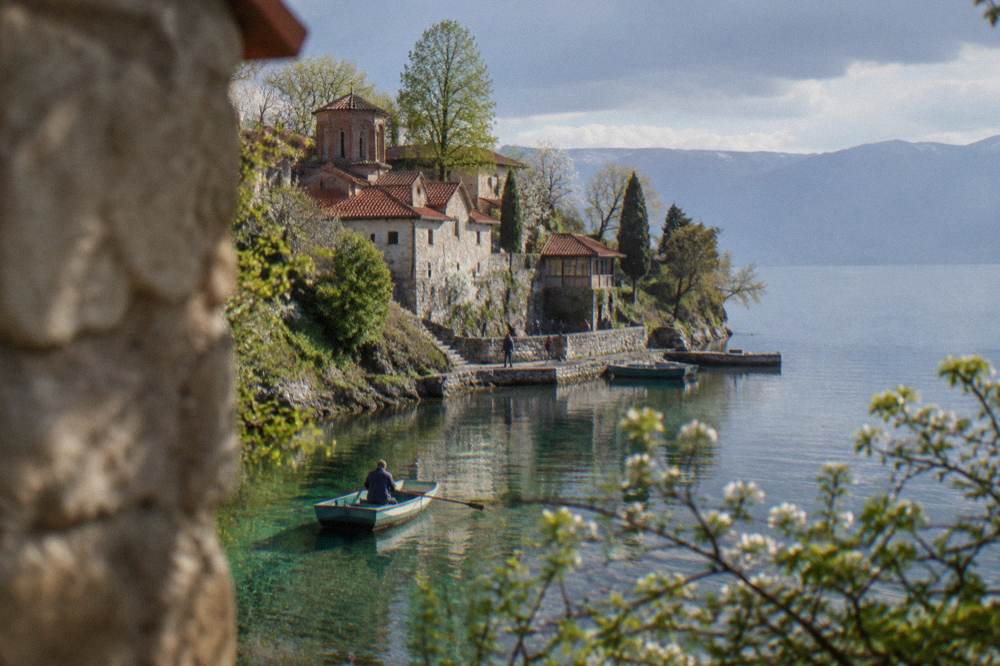
Spring also reshapes the lake rules, temporarily. Under the government decision announced by the Ministry of Transport on 2 June 2026, jet skis are banned from 1 July to 31 August between 11:00 and 19:00, and boats are restricted at night through the summer and into late autumn. In May and early June those limits have not yet started, but they show the direction the lake's management has taken, which is calmer water for swimmers in high season. A bookable alternative that bundles the whole southern lake into one day:
For a self-guided version, the practical detail that matters is that the monastery sits about 4 km from the Tushemisht border crossing with Albania, roughly a 10-minute drive, so a spring boat-and-border combination is possible in a single day if the crossing hours are checked on the day.
Which Day Trips Work From Ohrid In Spring?
The classic Ohrid day trips in spring are St Naum and the southern lake shore, Struga at the north end where the Black Drim leaves the lake, Galicica National Park once the snow clears from the ridge road, typically after March, and Lake Prespa across the ridge, with Skopje reachable at about 170 km by road in about 3 hours by bus for a fare of 850 to 950 MKD one way.
The distance figures come from the transport sources for those exact routes. Skopje is the long one: no passenger train runs to Ohrid and there is no domestic flight, so the bus or a private transfer of about 2.5 hours by car are the options, with motorway tolls of about 140 MKD along the way. The Skopje route guide covers it in full. Closer to town, Struga makes an easy half-day, and the Struga guide describes the town where the 65th Struga Poetry Evenings ran from 24 to 29 June 2026, a late-spring literary festival that moved from its traditional late-August slot.
| Day trip from Ohrid | Distance or fare from the sources | Spring note |
|---|---|---|
| St Naum monastery | about 4 km from the Tushemisht border | Boats resume about May |
| Struga | bus fares quoted at 100 to 150 MKD | Poetry festival in late June |
| Skopje | about 170 km, bus about 3 h, 850 to 950 MKD | No train, no domestic flight |
| Lake Ohrid airport (OHD) | about 10 km from the centre | Seasonal flight schedule, see the Ohrid airport guide |
Galicica deserves its own sentence in any spring plan. The park, North Macedonia's second national park, designated in 1958, covers 22,750 ha between the two lakes, and its vehicle entry fee is 250 MKD per car with no per-passenger charge; 100 MKD applies only to someone entering on foot from the Ohrid-side gate. The road across to Lake Prespa is open year-round in principle, but snow typically closes it between January and March, which makes April and May the months when the crossing becomes realistic again.
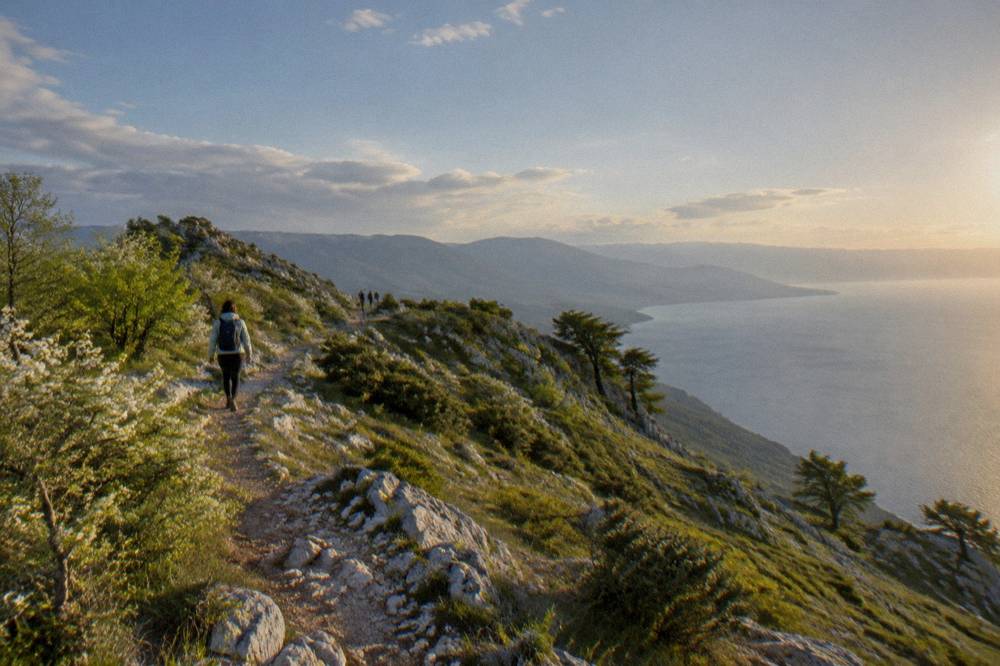
The countryside option rounds out the set. A spring excursion into the villages and cave churches around the lake covers a side of the region the town itinerary never touches:
What Is Happening In Ohrid In Late Spring?
The Ohrid event calendar builds slowly through spring: the 65th Struga Poetry Evenings ran 24 to 29 June 2026 with about 70 poets, the 65th Balkan Festival of Folk Songs and Dances ran 3 to 6 July 2026 in Ohrid, and the 66th Ohrid Summer Festival opened on 12 July 2026 at the Ancient Theatre, so a May or early-June visit lands before the festival season rather than inside it.
That timing is the quiet-streets promise of the page title in its most literal form. The festivals that put Ohrid on the cultural calendar cluster from late June through August, and spring sits ahead of them. The dates above are the 2026 editions; the 2027 dates have not been announced, so a 2027 trip should be planned against the pattern, not the calendar, and the Ohrid Summer Festival guide collects what is known. The swimming marathon is a summer event too: the 39th edition swam the 25 km Klime Savin route from St Naum to Ohrid harbour on 22 August 2026, and a separate 33 km SUP marathon around the lake ran on 26 August as part of the Ohrid Water Festival from 12 to 30 August.
Late spring has its own smaller rhythms. The museum institute's office hours on Boro Shain St run Monday to Friday, 07:30 to 15:30, year-round, and the switch of the museum sites to summer hours on 1 May is the moment the town visibly leans toward the season. Autumn mirrors all of this: the Ohrid in autumn guide describes the same schedule running in reverse, with the 1 October switch back to winter hours.
How Many Days Do You Need In Ohrid In Spring?
Three days is the working answer for a spring visit to Ohrid: one day for the old town churches and the museum sites, one for the southern lake with St Naum by boat or road once trips resume around May, and one for a wider day trip to Struga, Galicica or the villages, with the caveat that every museum site is closed on Monday and a Monday arrival loses a full sightseeing day.
The Monday closure is the detail that quietly wrecks itineraries. Robev Family House, the Icon Gallery and the Bay of Bones all close on Mondays in both schedules, so the church-and-lanes day and the boat day should be built around that fixed point. The how many days in Ohrid guide breaks the one-, two- and three-day versions of the town itself, and the things to do in Ohrid page is the full inventory to draw from.
| Spring day | Focus | Fixed facts to plan around |
|---|---|---|
| Day 1 | Old town, churches, museum sites | Museums closed Monday; summer hours from 1 May |
| Day 2 | Southern lake: Bay of Bones, St Naum | Boat trips run about May to October; Bay of Bones entry 150 MKD |
| Day 3 | Struga, Galicica or villages | Galicica road snow typically clears after March; park fee 250 MKD per vehicle |
Budgeting the trip works the same way in spring as in any season, and the figures that matter are the local ones: museum tickets at 150 MKD foreign rate, the park fee, the bus fares and the boat cruise prices already listed above. The Ohrid cost and budget guide and the denar and money guide handle the currency mechanics, including the fact that the denar is the local currency and euros are not legal tender, and the practical entry and safety questions have their own pages at North Macedonia visa and entry and is Ohrid safe, where the emergency numbers ambulance 194, police 192 and roadside assistance 196 are listed.
What Should You Pack For Ohrid In Spring?
Pack for a 15-degree spread between morning and afternoon: a proper jacket and closed shoes for March mornings near 2.5 C, layers that shed to a t-shirt by the 19.5 C May afternoons, a rain layer for the roughly 70 to 82 mm each spring month brings, and one smarter outfit if the trip crosses into the late-June festival window.
The numbers behind that list are the March-to-May normals already tabled above, and they are modelled figures, so the honest framing is a range rather than a promise. Footwear matters more than in summer because the old town lanes climb from the lake toward the fortress and wet stone is the default state after spring rain. A swimsuit can travel in the bag from late May onward for the hardened, and the swimming in Lake Ohrid page sets out when it stops being a novelty and becomes a normal lake swim.
Money deserves a pocket plan: cash in denars for museum counters, the park gate and the small spring-season kiosks, with the exchange rate managed per the money guide rather than improvised at the first ATM. Getting there and away, whether through Skopje to Ohrid by bus or into Ohrid airport on the seasonal flights, closes the plan.
Common Questions About Visiting Ohrid In Spring
Is spring a good time to visit Ohrid?
Yes, for a walking and sightseeing trip. The modelled normals run from about 10.0 C daytime highs in March to about 19.5 C in May, the museum sites move to their summer schedule on 1 May, and the big festivals do not start until late June, so the lanes stay uncrowded by summer standards.
Can you swim in Lake Ohrid in spring?
Generally no. Modelled lake surface temperatures are about 7.2 C in March, about 10.5 C in April and about 14.9 C in May, and the swimming season is considered to start around July when the modelled surface reaches about 22.9 C.
Are the Ohrid museums open in spring?
Yes, except Mondays. The museum institute sites run winter hours from 1 October to 30 April and summer hours from 1 May to 30 September, and every listed site, Robev Family House, the Icon Gallery and the Bay of Bones, is closed on Monday in both schedules.
Do boats to St Naum run in spring?
From about May. Boat trips on the lake generally operate from about May to October with a reduced winter schedule, so an early-spring visit should plan the St Naum trip by road or leave it for a May or later visit.
Does it rain a lot in Ohrid in spring?
Each spring month brings a similar amount: about 80.5 mm in March, about 82.4 mm in April and about 70.8 mm in May on the modelled 1991 to 2020 normals, so a rain layer belongs in the bag, but the season is not a washout.
Is the Galicica road open in spring?
Typically from April onward. The park road across the ridge between Lake Ohrid and Lake Prespa is open year-round in principle, but snow typically closes it from January to March, so late spring is the reliable window. The vehicle fee is 250 MKD per car.
Spring gives Ohrid back to walkers. The churches keep their hours, the museums open their summer schedule on 1 May, the boats return to the southern lake, and the festival crowds are still weeks away, which is exactly the combination the quiet-street half of the season promises.