Where To Stay In Ohrid: Old Town, Lakeshore Or Villages
Choosing a base in Ohrid comes down to three questions: how close to the Old Town lanes you want to sleep, whether you want the lake at the door, and whether a village base suits your trip better than the town itself.
Short answer
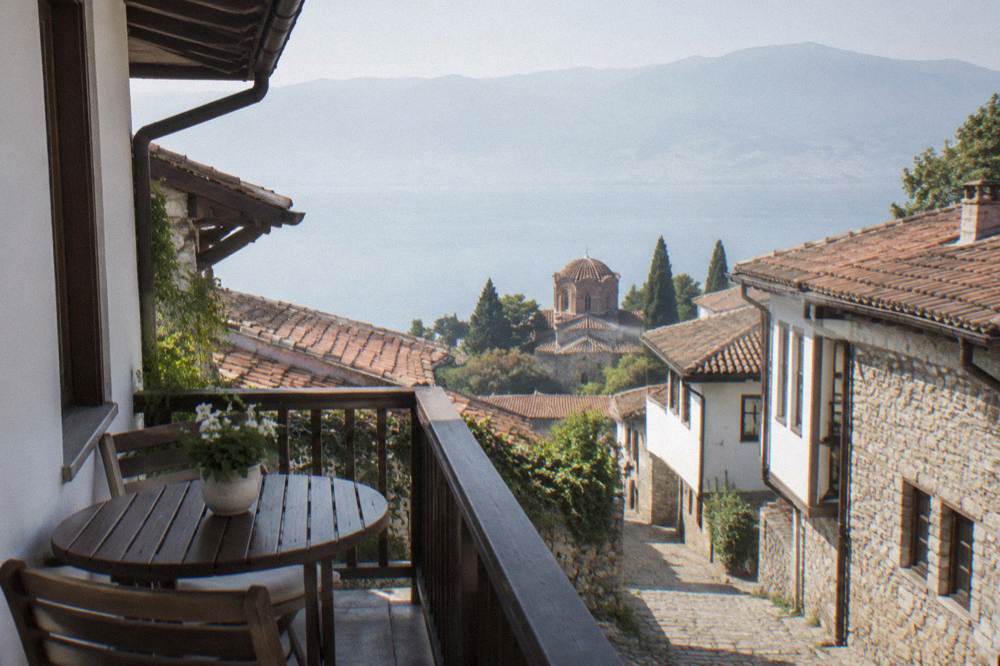
The Old Town puts the churches, the fortress and the lakefront within walking distance of your door; the eastern lakeshore around the centre trades stone lanes for flatter streets; and the villages such as Peshtani, Trpejca and Ljubanista suit travellers who want quiet water and are happy to ride buses or a car into town.
Ohrid is a lake town in North Macedonia, strung along the northern shore of Lake Ohrid, a freshwater mountain lake whose surface sits at about 693 m above sea level. The town's shape matters more here than in most destinations: the Old Town climbs a hillside from the water up to Samuel's Fortress, the flatter centre and quay sit beside it, and a string of lake villages runs east and south along the shore towards Peshtani, Trpejca and St Naum. Where you sleep decides how much of that geography you walk, how much you ride, and how quiet your evenings are. This Ohrid Travel Guide page compares the three realistic bases, the Old Town, the lakeshore quarters, and the villages, using what the published schedules, transport facts and climate data actually say.
Which Area Of Ohrid Should You Sleep In?
Sleep in the Old Town if being inside the UNESCO-listed lanes matters more than flat streets, sleep near the quay and the centre if you want level walking and the bus station close, and sleep in a lake village if you want quiet water and accept a bus or car ride into town. Each of the three bases works, and each trades something concrete: walking distance, street gradient, or transfer time.
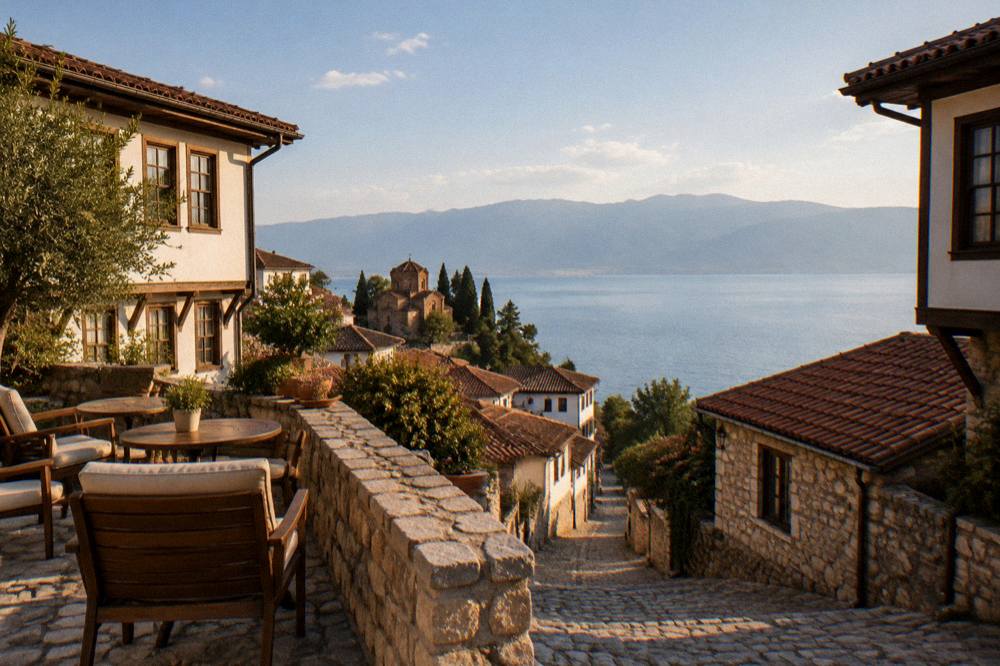
The choice is genuinely three-way because Ohrid is genuinely two towns plus a shoreline. The Old Town is the part inside the heritage area, lanes climbing from the lake to Samuel's Fortress and the Old Bazaar, on foot by design. The centre and the quay sit level beside the water, next to the port where lake boats leave. The villages, Peshtani, Lagadin, Trpejca, Ljubanista, run along the shore road east of town, each with its own beach and its own bus stop.
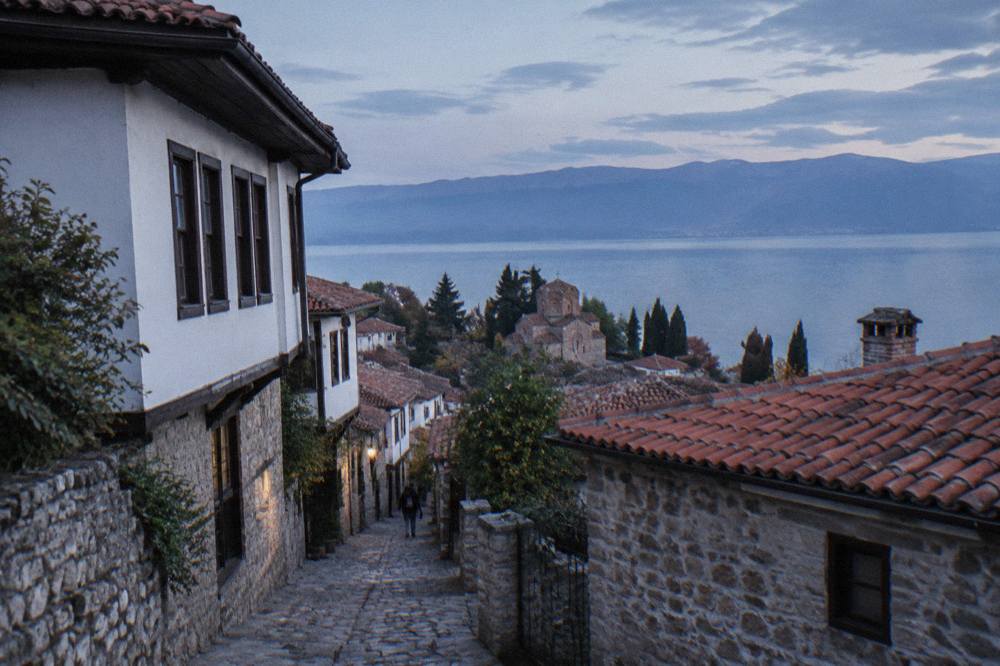
A first visit of one to three days is usually easiest from the Old Town or the quay: the one-day itinerary is walkable from either, and the question of how many days you need in Ohrid mostly concerns the day trips, not the town itself. A longer, slower stay, or a trip built around swimming, tilts towards the villages.
| Base | Character | Best for | Trade-off |
|---|---|---|---|
| Old Town lanes | Stone lanes, churches, fortress above, lake below | First visits, photographers, short stays | Slopes, lanes on foot, seasonal crowds |
| Centre and quay | Level streets, port, bus station, restaurants | Flat walking, boat departures, no car needed | Fewer heritage views from the door |
| Lake villages (Peshtani, Lagadin, Trpejca, Ljubanista) | Shore road, beaches, quiet water | Swimming, families, longer stays, car travellers | Bus or car ride to Old Town sights |
Is The Old Town The Best Base For Seeing Ohrid?
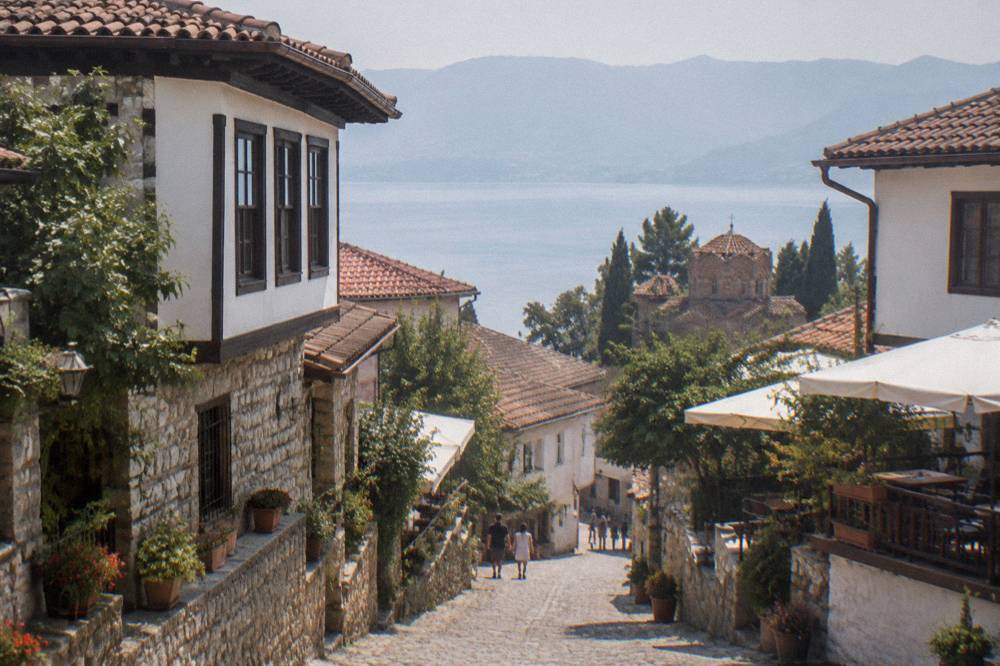
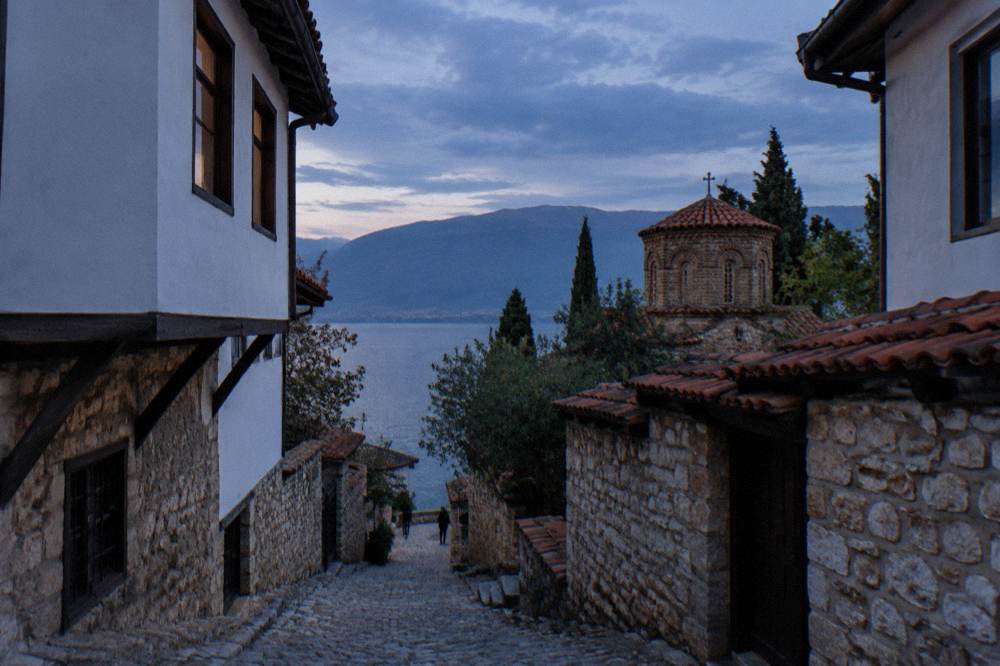
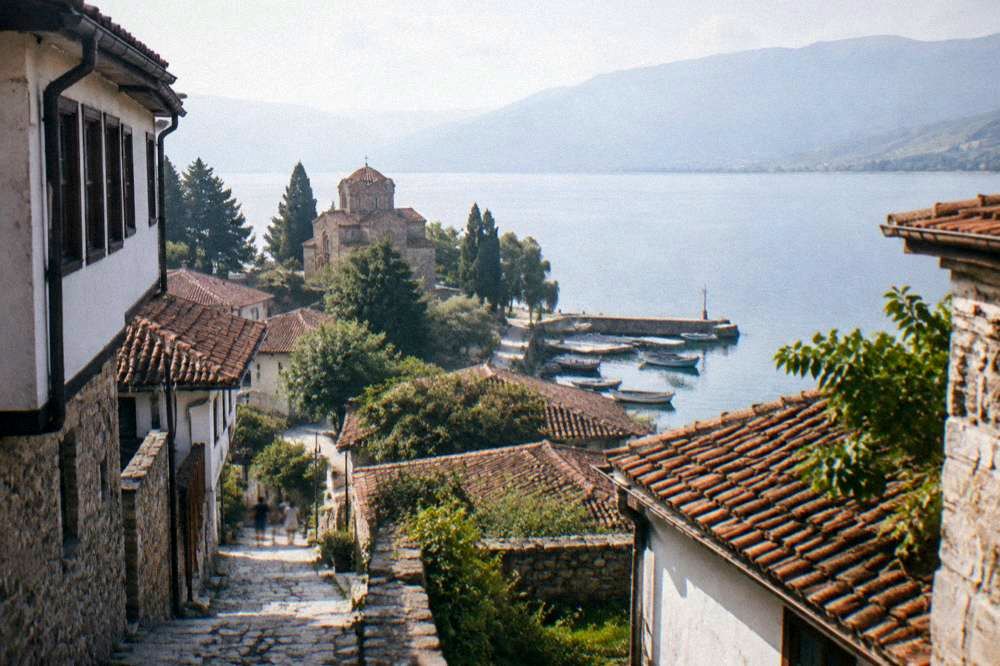
For the churches, the fortress and the atmosphere of the heritage lanes, yes: sleeping inside the Old Town puts St Sophia, the Ancient Theatre, the Old Bazaar and the fortress walk all within a short, steep walk, and the lakefront is below you at the bottom of the lanes. The price of that is gradient and cobblestones: the lanes climb from the water to the fortress walls, and the whole quarter is designed for feet, not vehicles.
To find your way around those lanes and churches, book an old town walking tour here.
The Old Town's advantages are structural. The Ancient Theatre, built at the end of the 3rd or start of the 2nd century BC per the museum institute's own page, sits mid-slope. St Sophia and the bazaar sit lower, near the flat ground. The fortress crowns the top. A bed anywhere in that triangle means the main sights are reached on foot, which matters because the lanes are narrow, old and pedestrian in character.
Two practical cautions come from published rules rather than impression. First, parking: from summer 2026 a resident-only parking regime applies to old-town streets including Ilindenska, Kosta Abrash and Car Samoil, with non-resident vehicles liable to clamping, so a car is a liability at an Old Town address; the details are on the parking guide. Second, gradient: luggage rolls badly on cobblestones, and the walk from the quay to the upper lanes is a real climb.
The best way to test whether the lanes suit you is to walk them with a guide on the first morning. The small-group city tour of the Old Town covers exactly this terrain, and it is easy to reserve a place before committing to a bed uphill: Check availability.
What Does The Lakeshore Around The Centre Offer?
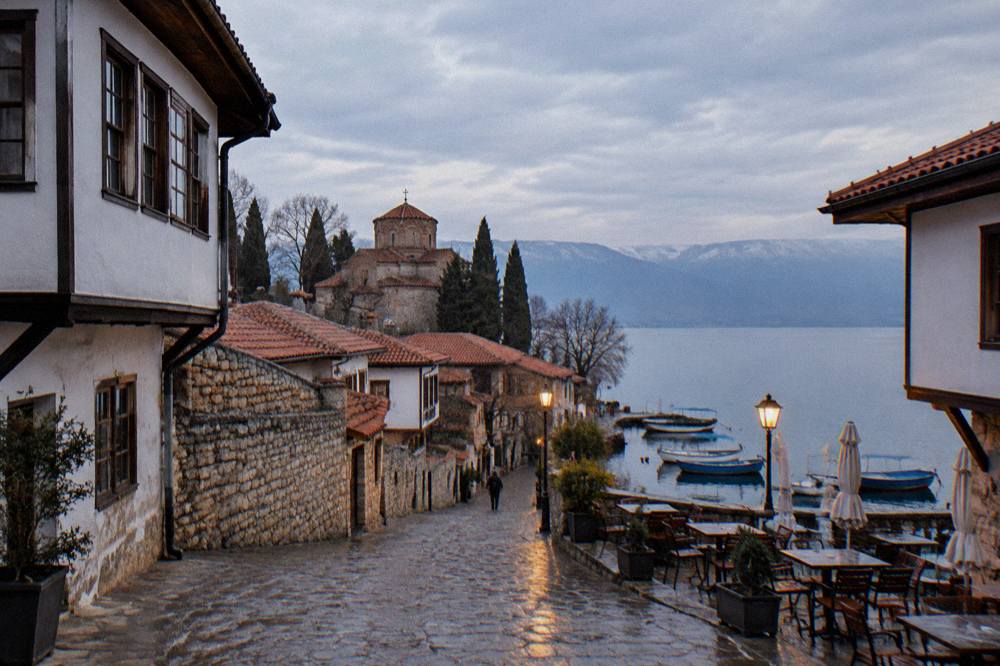
The level quarter between the quay, the port and the bus station trades the Old Town's stone lanes for flat streets, easy luggage handling and the boat departure point at the door, while keeping the old lanes a short walk away along the water. For travellers who dislike slopes, arrive by bus, or plan lake cruises, this strip is the practical middle option.
The geography favours it. Ohrid's bus station sits east of the centre, and the port where the lake boats leave sits on the town quay, so a bed between them needs no taxi for arrivals or departures. The full-day boat cruise to St Naum run by Boat Armada, for example, departs from the Ohrid port and takes about 7 hours, priced from 1,200 MKD for an adult and 600 MKD for a child. The panoramic old-town boat tours also leave from the town shore.
Restaurants cluster usefully here too, and the restaurants guide covers where the eating actually is. The trade-off is honest: from the flat streets you look at the lake across the quay rather than down on it from a stone balcony, and the postcard views belong to the lanes above.
| Lakeshore advantage | What it means day to day |
|---|---|
| Level streets | Luggage, strollers and tired legs all cope |
| Port at the door | Boat cruises to St Naum and Bay of Bones leave here |
| Bus station within reach | Skopje and Struga buses arrive and depart close by |
| Old Town in walking range | The lanes begin at the edge of the flat quarter |
A bed on this strip pairs naturally with a first evening on the water: the old-town panoramic boat tour runs from the town shore and shows the lanes, the fortress hill and the Kaneo church frontage from the lake, which is also a useful reconnaissance of where you have chosen to sleep.
Should You Stay In A Village Like Peshtani, Trpejca Or Ljubanista?
The lake villages east of town suit a stay built around swimming, quiet shores and longer relaxation: Peshtani sits beside the Bay of Bones museum, Trpejca and Ljubanista hold well-known beaches, and each is a shore-road bus or car ride from the Old Town sights. The deal is simple, you get calm water and space, and you commute for churches, restaurants and nightlife.
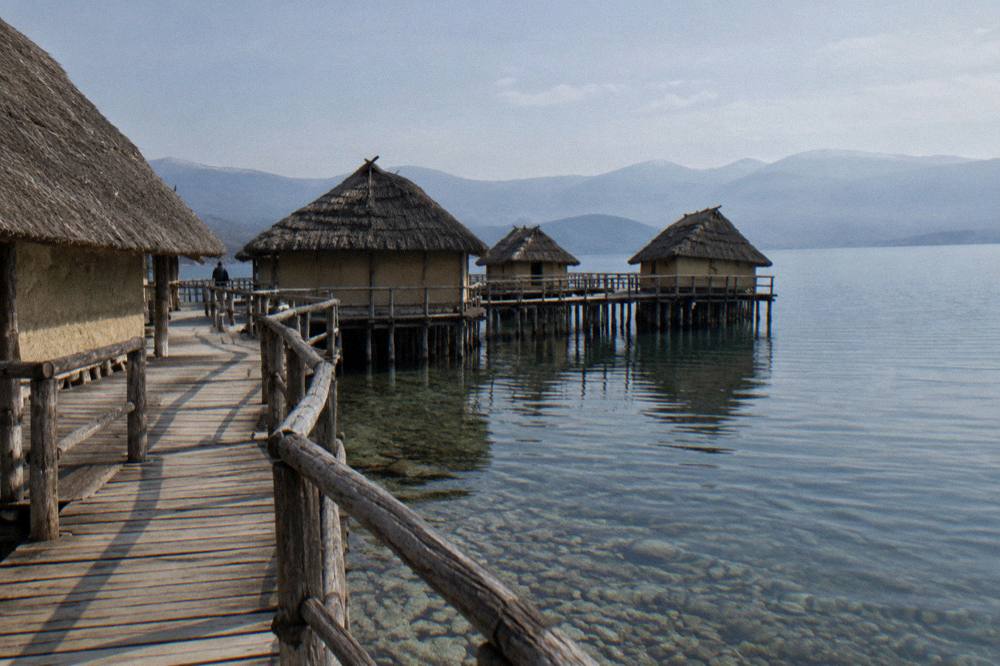
The villages are not suburbs; they are separate settlements along the shore road, each with its own character. Trpejca and Ljubanista hold the best-known swimming beaches of the eastern shore. Peshtani is the practical anchor for the Bay of Bones, the Museum on Water at Gradiste, whose summer hours run 09:00 to 16:30 from 1 May to 30 September and whose winter hours run 09:00 to 15:30, closed Mondays in both seasons.
Timing matters more here than in town, because the swimming season is bounded by water temperature. Modelled lake surface temperatures put July at about 22.9 C and August at about 23.5 C, with September still around 19.7 to 25 C depending on the dataset, while October falls to about 14.7 C. The UHMR multi-year October mean is 14.3 C. A village base earns its keep from roughly July to September; outside that window the villages quieten and the Old Town regains the advantage.
Village stays also open a different kind of day out. The hidden-Macedonia tours that reach cave churches and villages inland are built for exactly this traveller, someone with a car or a pick-up arrangement who values the countryside over the town centre.
How Do You Get To And Around Each Area?
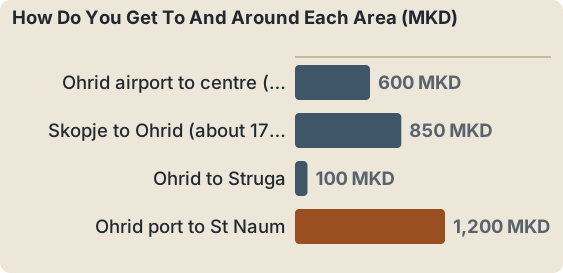
Ohrid's airport sits about 10 km from the centre on the E65, intercity buses from Skopje take about 3 hours at 850 to 950 MKD one way, the Tirana minibuses cross at Qafe Thane and take about 3 to 3.5 hours, and the local shore-road buses link town with Struga and the villages, so every base is reachable without a car except the farthest village stops.
The transport facts decide the village-versus-town question as much as taste does. Skopje is about 170 km by road; buses run several times daily and cost 850 to 950 MKD. From Tirana, roughly five to seven minibuses a day make the 3 to 3.5 hour run including the border, at about 15 to 20 EUR, mostly from Tirana's south and regional terminals. The airport guide covers arrivals; a taxi from the terminal to the centre is reported at about 600 to 800 MKD, roughly EUR 12.
| Route | Mode | Time | Fare as published |
|---|---|---|---|
| Ohrid airport to centre (10 km) | Taxi | short drive | about 600 to 800 MKD |
| Skopje to Ohrid (about 170 km) | Intercity bus | about 3 h | 850 to 950 MKD one way |
| Tirana to Ohrid | Minibus via Qafe Thane | about 3 to 3.5 h | about 15 to 20 EUR |
| Ohrid to Struga | Local bus | short hop | reported 100 to 150 MKD |
| Ohrid port to St Naum | Boat Armada day cruise | about 7 h | from 1,200 MKD adult |
Inside town, the honest answer is feet. The Old Town lanes are pedestrian in character, the quay is a walkable strip, and taxis handle airport runs and luggage days. A car makes sense for the villages, Galicica National Park and the Albanian shore, but at an Old Town address it meets the resident-only parking regime. Driving rules here are specific: headlights on day and night, a green card for insurance, and tolls paid plaza by plaza on the motorway sections, about 140 MKD in total on the Skopje route.
What Do Opening Hours Mean For Your Choice Of Base?
The museum sites all close on Mondays and run a winter schedule from 1 October to 30 April and a summer schedule from 1 May to 30 September, so a stay that includes a Monday, or that falls between October and April, needs a plan built around what is actually open, and an Old Town base makes the walk-to alternatives easiest to reshuffle.
The institute's own pages give the exact pattern. Robev Family House runs 09:00 to 15:30 in winter and, from 1 May, two shifts, 09:00 to 15:30 and 13:30 to 20:00, closed Monday. The Museum on Water at Peshtani runs 09:00 to 16:30 in summer, 09:00 to 15:30 in winter, closed Monday. The Icon Gallery at the Perivleptos complex runs 09:00 to 14:00 in winter and 09:00 to 17:00 in summer, closed Monday.
| Museum site | Summer (1 May to 30 Sep) | Winter (1 Oct to 30 Apr) | Closed |
|---|---|---|---|
| Robev Family House | 09:00 to 15:30 and 13:30 to 20:00 | 09:00 to 15:30 | Monday |
| Museum on Water, Peshtani | 09:00 to 16:30 | 09:00 to 15:30 | Monday |
| Icon Gallery, Perivleptos | 09:00 to 17:00 | 09:00 to 14:00 | Monday |
Tickets across the institute's sites are 120 MKD domestic and 150 MKD for foreign visitors, with a reported child and student rate of 60 MKD. A Monday in Ohrid is therefore a day for the lanes, the lake and the shore rather than the interiors, and a village base with a beach handles a Monday more gracefully than a sightseeing schedule does. The best time to visit guide works through the calendar in more detail.
How Does The Season Change Where You Should Stay?
July and August bring the modelled daily highs of 27.1 and 27.6 C and the year's lowest rainfall at 34.7 and 32.9 mm, plus the festival calendar and the crowds, while November and December carry 90.4 and 92.6 mm of rain and January a mean low of minus 0.8 C, so village bases make sense in the warm, dry months and Old Town or centre beds carry the shoulder seasons and winter.
These are modelled figures, ERA5 reanalysis normals for 1991 to 2020 at Ohrid, not a station record, and they describe averages rather than any given week. The pattern they draw is clear enough to plan around: a dry, warm core from June to August, a wet, cold tail from October to January.
| Month | Mean high C | Mean low C | Rain mm |
|---|---|---|---|
| Jan | 5.0 | -0.8 | 76.5 |
| Apr | 14.6 | 6.3 | 82.4 |
| Jul | 27.1 | 18.3 | 34.7 |
| Aug | 27.6 | 19.0 | 32.9 |
| Oct | 17.4 | 10.3 | 76.0 |
| Dec | 6.2 | 0.9 | 92.6 |
| Month | Modelled lake surface C |
|---|---|
| Jan | about 4.6 |
| Apr | about 10.5 |
| Jul | about 22.9 |
| Aug | about 23.5 |
| Oct | about 14.7 |
The events calendar also concentrates in summer. The 66th Ohrid Summer Festival opened on 12 July 2026 at the Ancient Theatre and ran to 20 August by tradition; the Balkan Festival of Folk Songs and Dances held its 65th edition from 3 to 6 July 2026; and the Ohrid Water Festival ran 12 to 30 August 2026, including the 25 km swimming marathon from St Naum to Ohrid harbour on 22 August. An Old Town or centre bed in July and August puts those venues in walking range, which a village bed does not. The weather guide carries the month-by-month detail.
What Should You Check Before Booking A Bed In Ohrid?
Check three things in order: whether the address sits inside the resident-only parking streets of the Old Town, whether your dates fall in the summer or winter museum schedule, and whether your arrival route, airport, Skopje bus or Tirana minibus, lands within walking or a short taxi of the door. Money comes last and is simple: the denar is the currency, and card habits should never be assumed.
The parking point deserves repeating because it is a 2026 rule with teeth: the old-town streets under the resident-only regime are closed to non-resident vehicles, with clamping reported. A booking confirmation that promises parking inside the Old Town should be read carefully. Beyond that, the practical layer is unglamorous. The money guide explains the denar, pegged in practice to the euro and dispensed widely by ATMs, with euros quoted by many operators but not legal tender. The safety guide and the visa and entry guide cover the rest: visa-free stays of up to 90 days in any 180-day period for visa-free nationals, police registration within 48 hours which hotels handle, and the standard advice that North Macedonia is neither in the EU nor in Schengen.
One more seasonal note that affects village and lakeshore beds alike: under a government decision of 2 June 2026, jet skis are banned on the lake from 1 July to 31 August between 11:00 and 19:00, and boats are restricted at night from early June through September, so the summer water in front of a beach bed is calmer than the reputation of a busy lake suggests.
For anyone still weighing Ohrid against other lake towns, or against a split stay with Struga, the lake guide and the hidden gems itinerary sketch the wider region, and the town's own long history, including how old Ohrid actually is, sits on the answers page about the town's age. The cost and budget guide finishes the picture for anyone pricing the whole trip.
Common Questions About Where To Stay In Ohrid
Where To Stay In Ohrid For A First Visit?
The Old Town or the level quarter by the quay. Both put the main churches, the fortress hill and the boat departures within walking distance, and the bus station and the port sit at the flat end of town.
Is It Better To Stay In The Old Town Or By The Lake?
The Old Town gives the stone lanes and the views but slopes and pedestrian-only streets; the quay side gives flat walking, the port and the bus station. The lake is visible from both, and the two areas meet at the water.
Can You Stay In Ohrid Without A Car?
Yes. The town itself is walkable, the airport is a short taxi ride, buses run from Skopje about every day at 850 to 950 MKD, and the shore villages are reached on the shore-road bus line. A car matters mainly for Galicica, the Albanian side and flexible village stops.
Which Village On Lake Ohrid Is Best For Swimming?
Trpejca and Ljubanista hold the best-known beaches of the eastern shore, and Peshtani sits beside the Bay of Bones museum. Modelled water temperatures point to July and August as the core swimming window.
Is Parking Difficult In The Ohrid Old Town?
From summer 2026, old-town streets including Ilindenska, Kosta Abrash and Car Samoil are reserved for residents with a valid sticker, and non-resident vehicles risk clamping. A car-free stay or a bed outside those streets is the simpler plan.
When Is The Low Season For Staying In Ohrid?
Roughly November to March, when modelled rainfall runs from 90.4 mm in November to 76.5 mm in January and the January mean low is minus 0.8 C. Museum sites switch to their winter schedule from 1 October to 30 April and close on Mondays.