Ohrid With Kids: Beaches, Boats And Easy Walks
Ohrid works well with children: a compact old town, short boat rides on a freshwater mountain lake at about 693 m above sea level, pebble beaches and museums priced in single-entry denar tickets.
Short answer
Ohrid suits families because everything sits close together: the old town lanes, the lake shore and the port are walkable, museum entry is 150 MKD for foreign adults and 60 MKD for children at institute sites, boat trips leave from the town port, and the lake is swimmable from about July, with modelled August surface temperatures around 23.5 C.
Ohrid, a lakeside town in North Macedonia on the shore of Lake Ohrid, packs beaches, boats, fortresses and church squares into a space small enough for short legs. The town sits on a freshwater mountain lake at about 693 m above sea level, inside the UNESCO mixed site "Natural and Cultural Heritage of the Ohrid Region", inscribed in 1979 and 1980 and extended to the Albanian side of the lake in 2019. This Ohrid Travel Guide page lays out a family visit: which walks are genuinely easy, which boat trips suit children, where the swimming spots are, and what the museums cost, in denar, exactly as the museum institute lists them.
Is Ohrid A Good Destination For Families?
Ohrid works for families because the town is small, the lake is the main attraction, and the core sights sit within walking distance of each other, so a day can be built from short blocks: a lane, a church square, a swim, a boat ride. The old town climbs from the shore to the fortress on foot, museum tickets are priced in single-entry denar amounts, and the lake itself, about two to three million years old per UNESCO, is the constant backdrop.
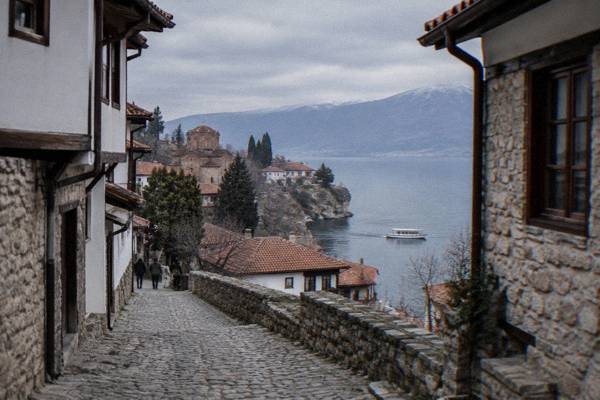
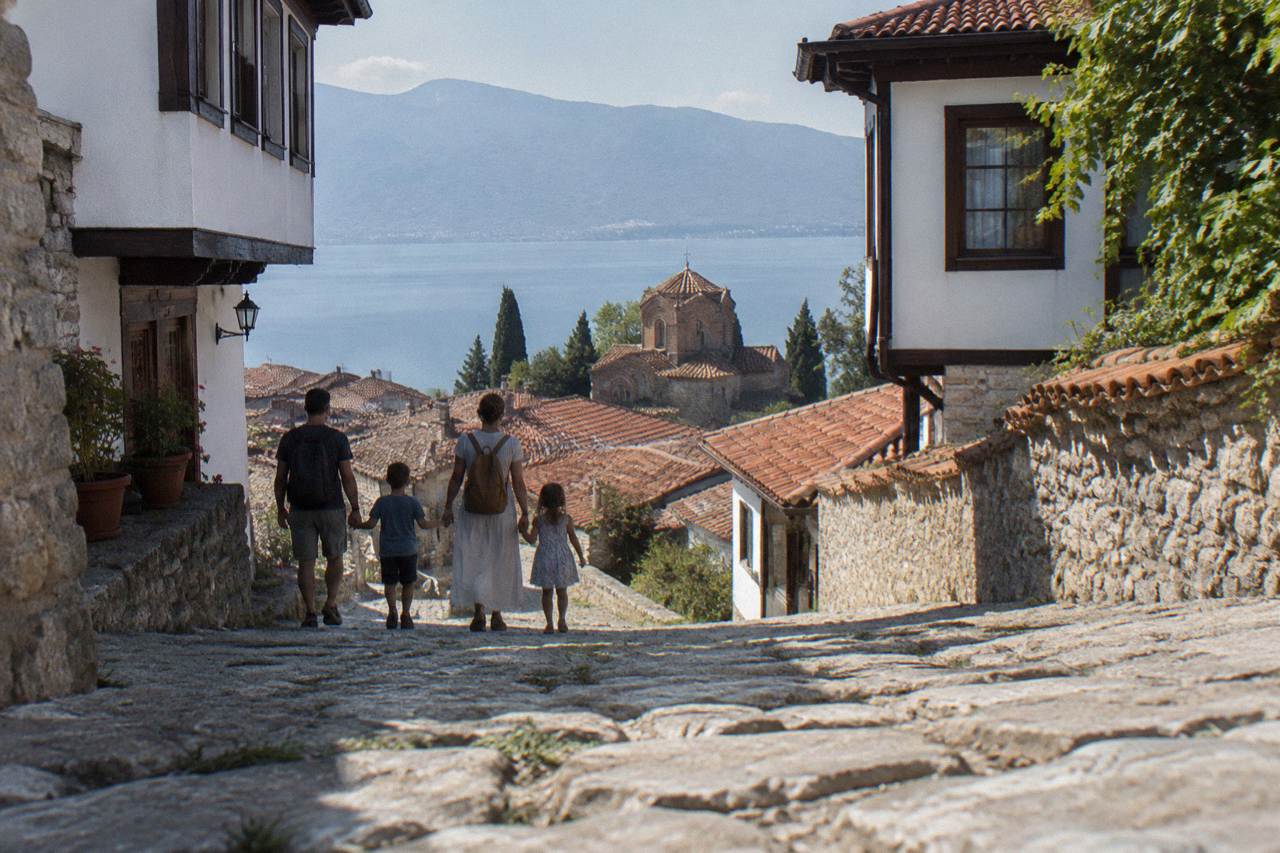
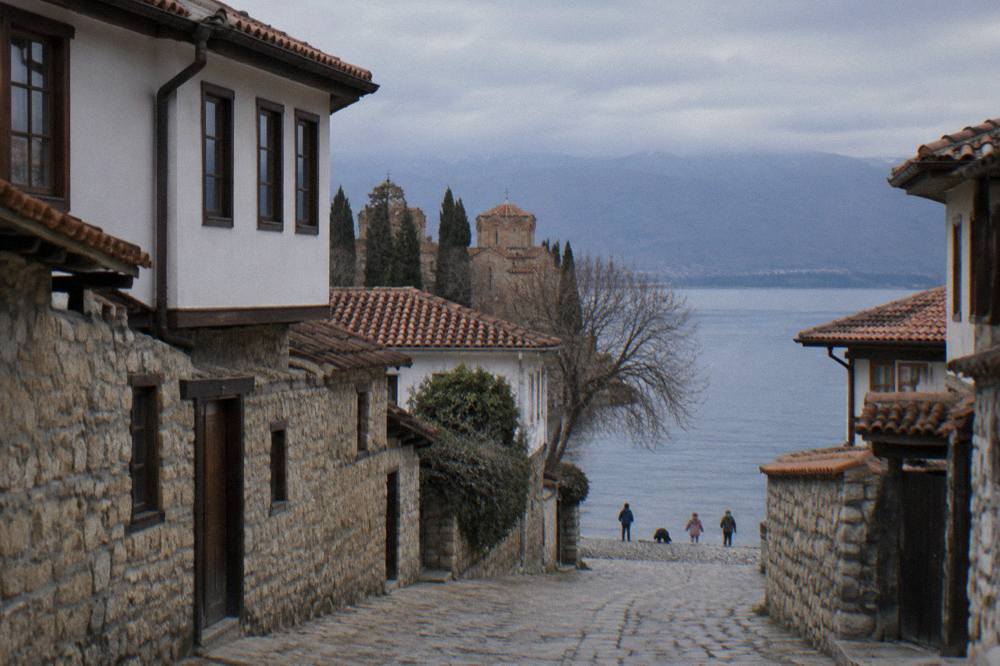
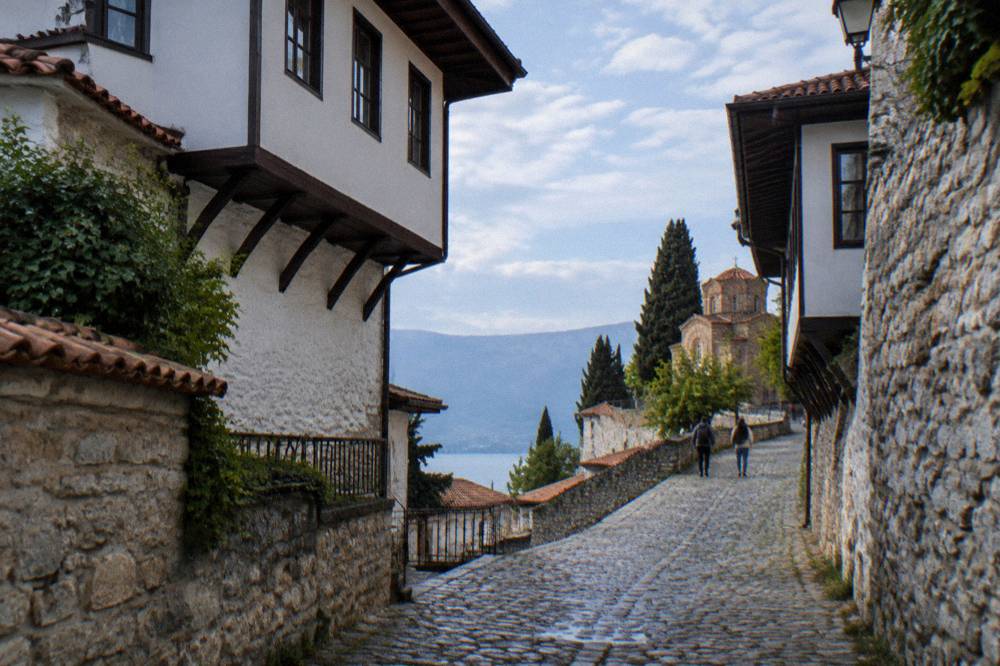
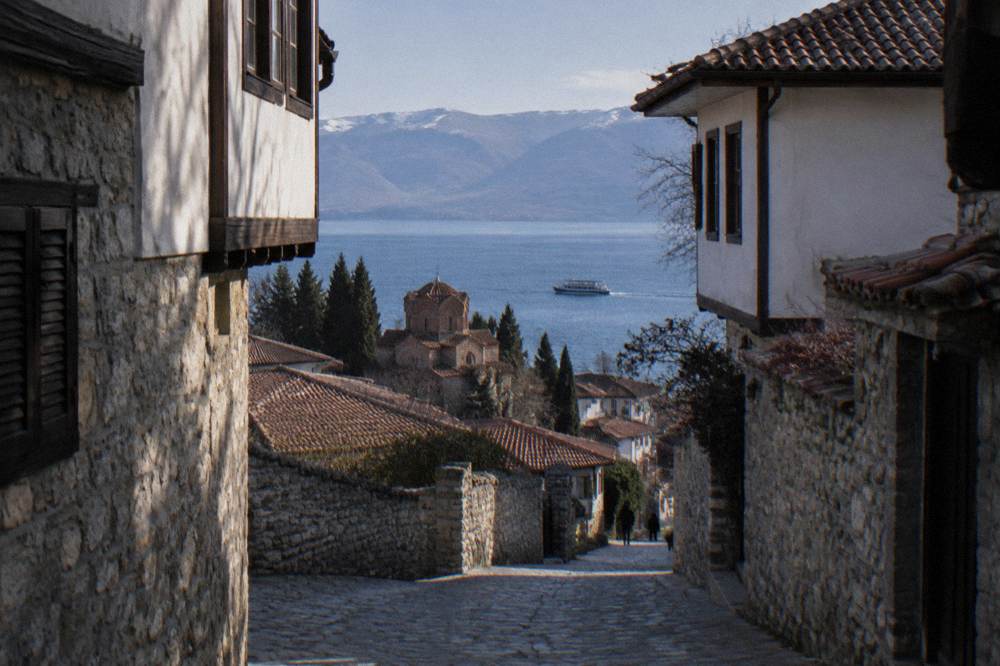
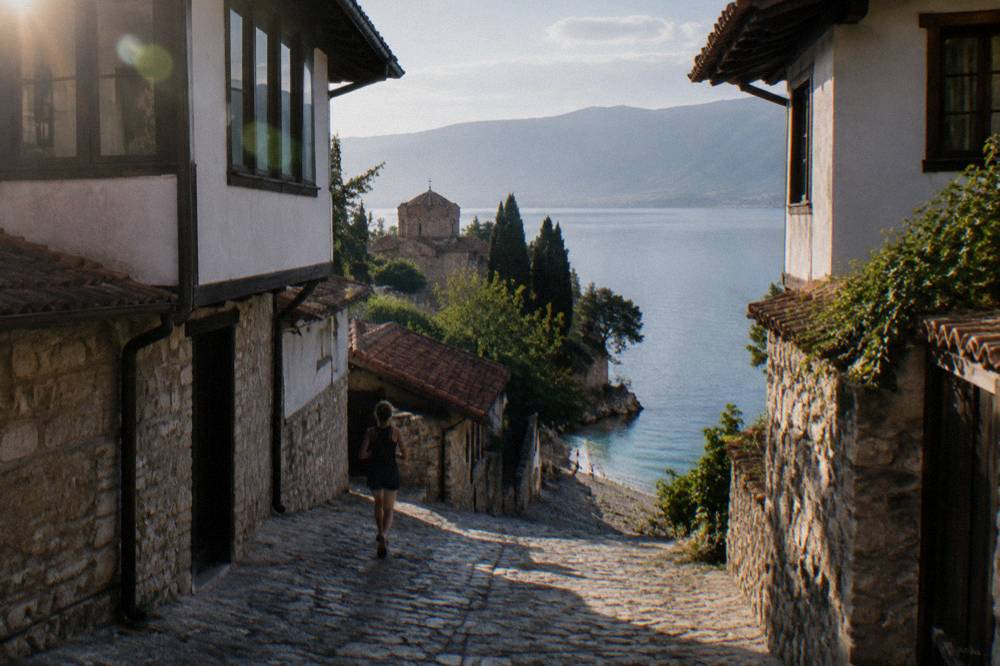
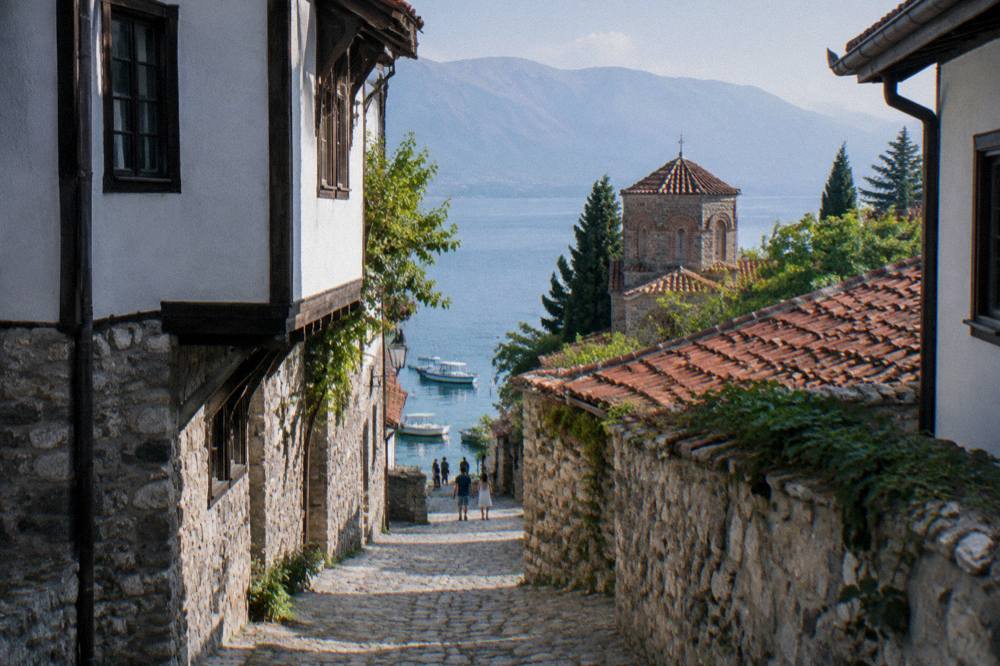
The layout is the first thing that helps. The old town is a set of lanes rising from the lake shore toward Samuel's Fortress, and the distances between the port, the Old Bazaar and the church terraces are short. The lanes are cobbled and hilly in parts, so shoes with grip matter more than a strict route plan. There is no tram, no river and no sea: the water on every side is Lake Ohrid, a mountain lake, so "beach" here means a pebble shore on fresh water rather than a coast.
The second thing is cost. The museum institute's own pages list 150 MKD for foreign adults, 120 MKD for domestic visitors and 60 MKD for children and students at its sites, which include the Robev Family House, the Bay of Bones and the Icon Gallery. A family of four can therefore tour several museums in a day without the ticket line becoming the biggest expense of the trip. The wider planning picture, including the top things to do in Ohrid, covers sights beyond the child-paced core described here.
Third, the water. The 2026 bathing tests reported by the Institute of Public Health found Class I physico-chemical quality across the lake's tested points except Grashnica beach, and most microbiological samples graded "Excellent", so swimming in the lake is normal summer practice. Modelled aggregator figures put the surface at about 22.9 C in July and 23.5 C in August, with the swimming season running from about July.
Which Easy Walks In Ohrid Old Town Work With Children?
The easiest family walks in Ohrid are the lakeshore stretch along the town, the climb from the port up to the plateau at St John at Kaneo, and the lane route between the Old Bazaar and the fortress walls, all short distances on foot with the lake visible for much of the way. The old town is hilly and cobbled in parts, so pace the day around a few stops rather than one long march.
The classic loop is the one most families end up walking. Start at the port, follow the shore, climb to the church of St John at Kaneo on its terrace above the lake, then continue up to the fortress plateau and descend through the lanes back to the Old Bazaar. Each segment is short, and each has a clear reward at the end: a terrace, a wall, an ice cream stop. The Samuel's Fortress walls give the wide view over the lake, and the site had a municipal revitalisation plan budgeted at over 11 million denars in 2026 for a summer stage and illumination, reported in the local press.
Want the classic family loop explained as you walk it? Book an old town walking tour here.
For a flatter day, keep to the shore. The lakeside promenade and the boardwalk stretch let children run while adults take in the water, and the port at the end is where the boats leave from, which makes a natural next activity.
The weather shapes the walk. Modelled ERA5 reanalysis normals for 1991-2020 put the mean daily high at 27.1 C in July and 27.6 C in August, with lows of 18.3 C and 19.0 C, so mornings are the comfortable climbing hours in summer. In winter the mean daily high drops to 5.0 C in January with a mean low of -0.8 C, and rain totals 92.6 mm in December, which is when the indoor options in the museum section below earn their place.
| Month | Mean high C | Mean low C | Rain mm |
|---|---|---|---|
| Jan | 5.0 | -0.8 | 76.5 |
| Mar | 10.0 | 2.5 | 80.5 |
| May | 19.5 | 10.8 | 70.8 |
| Jul | 27.1 | 18.3 | 34.7 |
| Aug | 27.6 | 19.0 | 32.9 |
| Oct | 17.4 | 10.3 | 76.0 |
| Dec | 6.2 | 0.9 | 92.6 |
Which Boat Trips On Lake Ohrid Suit Children?
Short cruises from Ohrid port suit children best: a one-hour panoramic old-town cruise stays close to shore, a sunset cruise runs in the evening light, and full-day trips reach the Bay of Bones and St Naum with swimming stops. The full-day cruise listed by operator Boat Armada runs seven hours from Ohrid port, from 1,200 MKD per adult and 600 MKD per child, so the choice is really about a child's tolerance for a day afloat.
The port is the practical starting point, and the Lake Ohrid boats and ferries guide covers the routes in depth. For families the decision tree is simple. An hour on the water with the old town in view is a low-commitment first boat trip, and the short cruises from Ohrid port include exactly that kind of ride alongside longer options. An evening sunset cruise is the other easy fit: children get the boat, adults get the light on the water. The sunset cruise from this page's picks can be checked at the operator's live listing, and free cancellation applies if a tired child changes the plan: Check availability.
The full-day option is the ambitious one. The Armada cruise to St Naum takes seven hours, calls at the Bay of Bones and includes time at the monastery end of the lake, with the 150 MKD Bay of Bones entrance listed as not included. The 2026 navigation rules matter here: a government decision reported by the Ministry of Transport on 2 June 2026 bans jet skis from 1 July to 31 August between 11:00 and 19:00 and restricts night boating from 3 June through September, changes made for swimmer safety. For families that means quieter daytime water in the peak weeks.
One warning worth writing down: the boats to St Naum run about May to October and reduce or stop in winter, so a spring half-term or October visit may find the full-day trips off the water. The two day Ohrid plan covers what runs in each season on the St Naum leg.
Where Can Children Swim In Lake Ohrid?
The main swimming spots around Ohrid are the town beaches and lido near the centre, the pebble shores at Gradiste, Lagadin, Ljubanista, Potpesh and Labino along the lake, and the water off Trpejca on the eastern shore, all freshwater pebble or mixed shores on Lake Ohrid. The swimming season runs about July to September, when modelled surface temperatures reach roughly 22.9 C in July and 23.5 C in August.
The lake is fresh water, and its quality is monitored: the 2026 tests reported by the Institute of Public Health graded most sampled points "Excellent" microbiologically, with Grashnica beach the exception at Class III. For families, the practical read is that swimming in the lake is an ordinary summer activity, and the Ohrid beaches guide maps the shores in detail. In town, the city beach and lido keep the walk short: swim, dry off, walk back into the lanes for lunch. Further out, Gradiste and Lagadin sit on the road toward Peshtani, close to the Bay of Bones, which makes a swim stop a natural pairing with a museum visit.
| Month | Modelled surface temp C |
|---|---|
| Jan | 4.6 |
| Mar | 7.2 |
| May | 14.9 |
| Jul | 22.9 |
| Aug | 23.5 |
| Oct | 14.7 |
| Dec | 6.0 |
The temperature table is the honest planning tool. Modelled aggregator figures say May sits around 14.9 C and October around 14.7 C, and the UHMR multi-year October mean is 14.3 C, so shoulder-season swimmers are the exception, not the plan. Build a spring or autumn itinerary around walks and museums instead, and let the beach be the summer bonus. For a child who wants to be on the water rather than in it, the eastern-shore village of Trpejca and the surrounding sveti Stefan and eastern shore area combine a pebble beach with the quiet end of the lake.
Which Ohrid Sights And Museums Hold A Child's Attention?
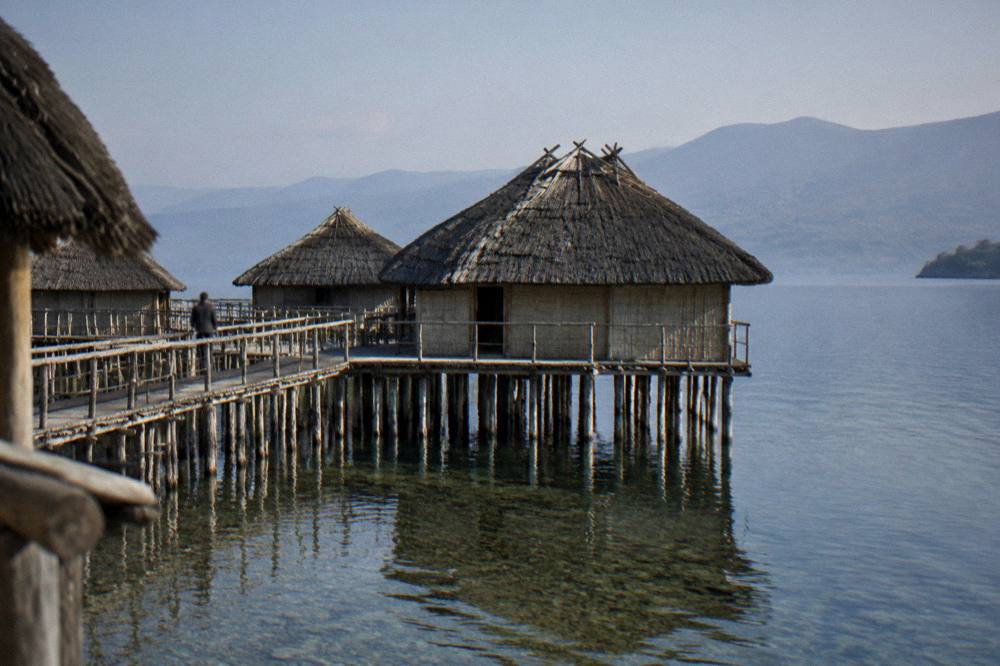
The Bay of Bones is the child favourite by design: it is the Museum on Water, a reconstruction of a prehistoric settlement built on piles over the lake, reached along the shore road. The museum's own page lists winter hours of 09:00 to 15:30 from 1 October to 30 April and summer hours of 09:00 to 16:30 from 1 May to 30 September, closed Monday. Back in town, the Robev Family House on Tsar Samoil Street runs two summer shifts, 09:00 to 15:30 and 13:30 to 20:00 from 1 May, winter hours of 09:00 to 15:30, also closed Monday. The Icon Gallery at the Perivleptos complex runs winter hours of 09:00 to 14:00 and summer hours of 09:00 to 17:00, closed Monday.
| Institute site | Winter hours (1 Oct to 30 Apr) | Summer hours | Closed |
|---|---|---|---|
| Robev Family House | 09:00 to 15:30 | 09:00 to 15:30 and 13:30 to 20:00 | Monday |
| Bay of Bones, Peshtani | 09:00 to 15:30 | 09:00 to 16:30 | Monday |
| Icon Gallery, Perivleptos | 09:00 to 14:00 | 09:00 to 17:00 | Monday |
The Ancient Theatre is the outdoor stop. The museum institute's page records it as built at the end of the third or start of the second century BC, first excavated in 1935, with a capacity that rose to about 5,000 after the epiteatron was added. It is a walk-through space rather than a ticketed hall, and its summer role as an Ohrid Summer Festival venue, with the 66th edition opening there on 12 July 2026, gives older children a sense of a stage still in use. The St Sophia and Plaosnik pages cover the church sights in depth for families who want the full heritage circuit.
A note on pacing: the institute's office itself keeps weekday hours of 07:30 to 15:30 at Boro Shain Street 10, and the child and student rate of 60 MKD appears on the ticket page. That Monday closure is the single most useful line in this section: plan museums for any day except Monday, and put the fortress plateau, the shore walk or a boat trip in the Monday slot instead.
How Do You Build A Child-Paced Day Plan For Ohrid?
A child-paced Ohrid day pairs one walk, one water activity and one museum: mornings on the lanes or the fortress plateau before the heat, midday at a beach or on a short cruise from the port, and the late afternoon at the Bay of Bones or Robev House, keeping Monday clear of museums entirely and finishing with an evening stroll on the shore. Three days is a comfortable base, and the site's itinerary pages extend the same blocks to longer stays.
A one-day version is the loop: port to St John at Kaneo, up to the fortress plateau, down through the lanes to the Old Bazaar, and an hour on the water before dinner. The Ohrid in one day itinerary walks that route in full. With two or three days, add the eastern shore: the three day plan adds St Naum and the monastery springs, where the entrance is 150 MKD per person and a rowboat through the Crn Drim springs is quoted at about 5 EUR, both listed on a cruise operator's page. Rainy-day cover exists too: the Ohrid in the rain plan leans on the museums and indoor stops.
| Day | Morning | Midday | Afternoon |
|---|---|---|---|
| 1 | Old town loop to St John at Kaneo and fortress plateau | Lunch in the Old Bazaar | Short cruise from Ohrid port |
| 2 | Bay of Bones, Peshtani | Gradiste or Lagadin beach | Icon Gallery and Perivleptos |
| 3 | Boat or road to St Naum | Monastery and springs rowboat | Eastern shore, Trpejca |
Families arriving without a car can still reach the far stops: the full-day boat cruise covers Bay of Bones and St Naum in one ticket, and Galicica National Park, the country's second national park, founded in 1958, with 22,750 hectares between Lake Ohrid and Lake Prespa and Magaro peak at 2,254 m, charges 250 MKD per vehicle with no per-passenger fee, or 100 MKD only for someone entering on foot from the Ohrid-side gate. The park's main road can close under heavy snow, typically January to March. The Ohrid hiking pages cover the park's trails, which suit older children rather than toddlers.
What Does A Family Trip To Ohrid Cost?
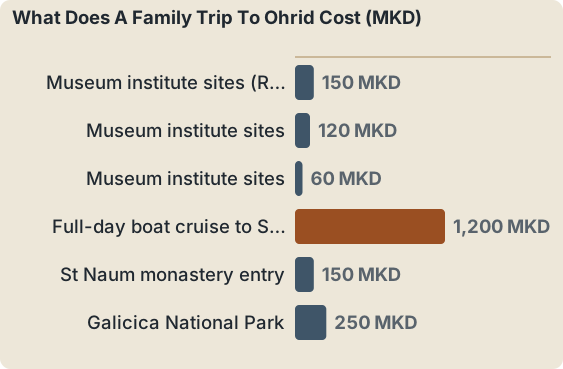
A family trip to Ohrid is priced in denar at the sights: museum institute tickets at 150 MKD foreign adults, 120 MKD domestic and 60 MKD children and students, the full-day boat cruise at 1,200 MKD adults and 600 MKD children, St Naum entry at 150 MKD and the springs rowboat at about 5 EUR, with Galicica at 250 MKD per vehicle, so the sightseeing budget is modest and predictable. Food, rooms and transfers sit outside these figures.
The currency point matters first. North Macedonia is not in the EU, the denar (MKD) is the local currency, and euros are not legal tender, though tour products are commonly quoted in euros and dollars. The National Bank's middle rate on 19 October 2026 was 1 EUR to 61.6633 MKD, and the denar is de facto pegged to the euro, but local prices stay in MKD as printed above and are never converted on this site. The practical rule is simple: pay denar for tickets and local costs, and expect the bookable tours on this site to be priced in their listing currency.
| Item | Price | Who it applies to |
|---|---|---|
| Museum institute sites (Robev House, Bay of Bones, Icon Gallery) | 150 MKD | Foreign adults |
| Museum institute sites | 120 MKD | Domestic visitors |
| Museum institute sites | 60 MKD | Children and students |
| Full-day boat cruise to St Naum (Boat Armada) | 1,200 MKD adult, 600 MKD child | Cruise ticket |
| St Naum monastery entry | 150 MKD | Per person, per operator listing |
| Crn Drim springs rowboat | About 5 EUR | Per boat, per operator listing |
| Galicica National Park | 250 MKD per vehicle, 100 MKD on foot | Per vehicle or per pedestrian |
Getting there is the other big line. Ohrid's St Paul the Apostle Airport is about 10 km from the centre. From Skopje it is about 170 km by road, with buses taking about three hours at 850 to 950 MKD one way, a car about 2.5 hours plus about 140 MKD in tolls, and no passenger train and no domestic flight on the route. Private transfers from Skopje start at about EUR 130, and from Tirana, minibuses run several times a day for about EUR 15 to 20 over three to three and a half hours including the border. Families flying into Tirana can also take a private day tour that starts in Tirana, which the picks below include.
For a lighter water budget, paddleboard rental puts a family on the lake for an hour at a time, with old-town and Kaneo views from the water. Children who are confident swimmers can also try a first scuba experience in the lake; the products carry their own age and safety terms in the listing.
What Practical Tips Help With Children In Ohrid?
The practical wins in Ohrid with children are the summer schedule at the port, the two-shift museum hours from 1 May, denar cash for tickets, mornings for climbing, and the 2026 rules that matter on the ground: resident-only parking on the old-town streets of Ilindenska, Kosta Abrash and Car Samoil from summer 2026, with clamping for non-residents, and jet skis banned from the water between 11:00 and 19:00 in July and August.
Parking is the one that catches driving families. The new regime, reported as taking effect around July 2026, reserves those old-town streets for residents with a valid sticker, so a car is best left outside the old core and the day done on foot. On the water side, the 2026 navigation limits mean quieter daytime swimming water in peak summer and no night boating in the restricted windows, both aimed at swimmer safety.
For emergencies, the numbers to save are ambulance 194, police 192 and roadside assistance 196. Tap water in Ohrid is generally reported as drinkable from the municipal supply. Visa-free visitors, including UK, US, EU and Canadian citizens, can stay up to 90 days in any 180-day period; UK visitors get up to three months, need a passport valid at least 90 days after arrival, and registration with the local police within 48 hours, which hotels handle. North Macedonia is not in Schengen, so border crossings are real borders: allow time, and note the Sveti Naum to Tushemisht crossing with Albania is about 4 km from the monastery, reported open around the clock.
Longer-stay families can extend the same blocks: the five day itinerary adds Struga, Lake Prespa and the Albanian side, the free day plan gives a slow day with no fixed schedule, and couples planning a return trip without children have the Ohrid for couples plan. Evening options with tired children stay simple: the shore stroll, the port, and the Ohrid at night picks for families with older kids.
Common Questions About Visiting Ohrid With Kids
Is Ohrid good for children?
Yes. The town is compact and walkable, the lake offers beaches and short boat trips from the town port, museum tickets cost 150 MKD for foreign adults and 60 MKD for children at institute sites, and the lake's 2026 bathing tests graded most points "Excellent" microbiologically.
Can children swim in Lake Ohrid?
Yes, in summer. The swimming season runs about July to September, with modelled surface temperatures of about 22.9 C in July and 23.5 C in August. The main family shores are the town beaches plus Gradiste, Lagadin, Ljubanista, Potpesh and Labino.
Are the Ohrid museums open every day?
No. The museum institute sites, including the Robev Family House, the Bay of Bones and the Icon Gallery, are closed on Mondays. They run winter hours from 1 October to 30 April and longer summer hours from 1 May.
Is the Ohrid old town walkable with a family?
Largely, with caveats. The lanes are hilly and cobbled in parts, so the port-to-Kaneo-to-fortress loop is best done in short blocks with grippy shoes, and the lakeshore promenade is the flat alternative.
Which boat trip is best with young children?
A short one. A one-hour panoramic cruise stays close to the old town shore, and the evening sunset cruise is the other easy option. The full-day cruise to St Naum, seven hours from 1,200 MKD per adult and 600 MKD per child, suits children who tolerate a long day afloat.
Do boats to St Naum run all year?
No. Boats to St Naum run about May to October and reduce or stop in winter, though the road to St Naum stays open, so the monastery and the springs rowboat, about 5 EUR, remain reachable by land outside the boat season.