Solo, Female And LGBTQ Travel In Ohrid
Ohrid is a small, walkable lake town in North Macedonia where a solo traveller can cover the old town, the lakeshore and the main sights on foot, with low local costs and a straightforward safety picture.
Short answer
Ohrid works well for solo, female and LGBTQ travellers: the US State Department rates North Macedonia Level 1, the town centre is compact and walkable, and the main risks are practical ones, seasonal boat schedules and winter museum hours, not personal safety.
Ohrid sits on Lake Ohrid, a freshwater mountain lake at about 693 m above sea level in North Macedonia, and its old town climbs from the shore to Samuel's Fortress in a network of lanes that a solo traveller covers entirely on foot. The town's economy runs on summer visitors, the season peaks between June and September, and outside those months the pace slows while the core sights stay open on winter schedules. This page on the Ohrid Travel Guide pulls together what solo, female and LGBTQ visitors actually need for Ohrid: the safety record from official advisories, the walkable geography, the costs a lone traveller pays alone, and the tours and activities that work without a companion. It builds on the general practical tips for Ohrid and the wider North Macedonia travel guide.
Is Ohrid Safe For Solo Travellers?
Ohrid is considered safe for solo travellers by the main official advisories: the US State Department rates North Macedonia at Level 1, Exercise Normal Precautions, its lowest category, and the town itself is small enough that orientation takes a day. The realistic concerns are mundane, seasonal lake boats, winter opening hours at museum sites, and icy lanes in cold months, rather than crime directed at visitors.
That Level 1 rating comes from the State Department's country advisory for North Macedonia, which was last revised in January 2025 and which applies to the whole country, not just Ohrid. The UK's Foreign, Commonwealth and Development Office maintains standard travel advice for North Macedonia without a numbered warning level, and its practical pages focus on entry rules and border logistics rather than safety incidents. Neither advisory singles out Ohrid or the lake region for concern.
For a solo traveller the practical safety infrastructure matters more than the rating. The emergency numbers confirmed on the FCDO's help page are ambulance 194, police 192 and roadside assistance 196. The town's old core is a set of connected lanes between the lake and the fortress, so walking back after dark stays within a compact area, and the question of whether Ohrid is safe overall has its own detailed page. Common sense applies as anywhere: keep valuables out of back pockets on the busy summer quay, and agree a taxi price before setting off, since meters are not always used.
Solo visitors arriving by air should note that Ohrid St Paul the Apostle Airport (OHD) is about 10 km from the centre, with access via the E65, and the airport's own passenger guide describes arrival by car or taxi rather than a regular public shuttle. Arranging the last leg before a late arrival removes the one genuinely awkward solo moment of an Ohrid trip.
Is Ohrid Safe For Solo Female Travellers?
Ohrid presents a low-risk environment for women travelling alone by every official measure available: the State Department's Level 1 advisory carries no women-specific warning for North Macedonia, the town's visitor economy is family-oriented, and the old town's compact street network keeps walking distances short. Standard solo precautions, sharing your itinerary and checking transport before dark, cover the situation.
The advisory framework matters here because it is the only institutional safety signal that exists for the destination, and it is a calm one. Beyond that, the structure of Ohrid itself does a lot of quiet work for a solo female visitor. The old town, the Old Bazaar, the quay and the main church sites sit within continuous walking distance of each other, so evenings do not require long solo taxi rides or deserted transfers between districts. The lakeside promenade around the harbour stays a shared public space in season.
Practical habits that travel writers recommend for the Balkans generally apply unchanged. Keep a phone charged, since the emergency numbers are short to dial: police 192, ambulance 194. Book accommodation with 24-hour reception if arriving on a late flight into OHD, which is about 10 km out. When taking a taxi, agree the fare in advance; reported airport-to-centre taxi costs run to about 600 to 800 MKD, roughly EUR 12, and a solo passenger has every reason to settle the number before the doors close.
Want peace of mind on medical costs and cancellations before you go? Book a travel insurance here.
Season shapes the experience too. Peak season runs June to September with August the busiest month, and the quay, beaches and boat schedules are fully staffed then. From November the town thins out, which many solo travellers prefer, but the lake boats to St Naum reduce or stop outside roughly May to October, so winter visitors plan the lakeshore trips by road instead. The page on the best time to visit Ohrid breaks the months down with climate figures.
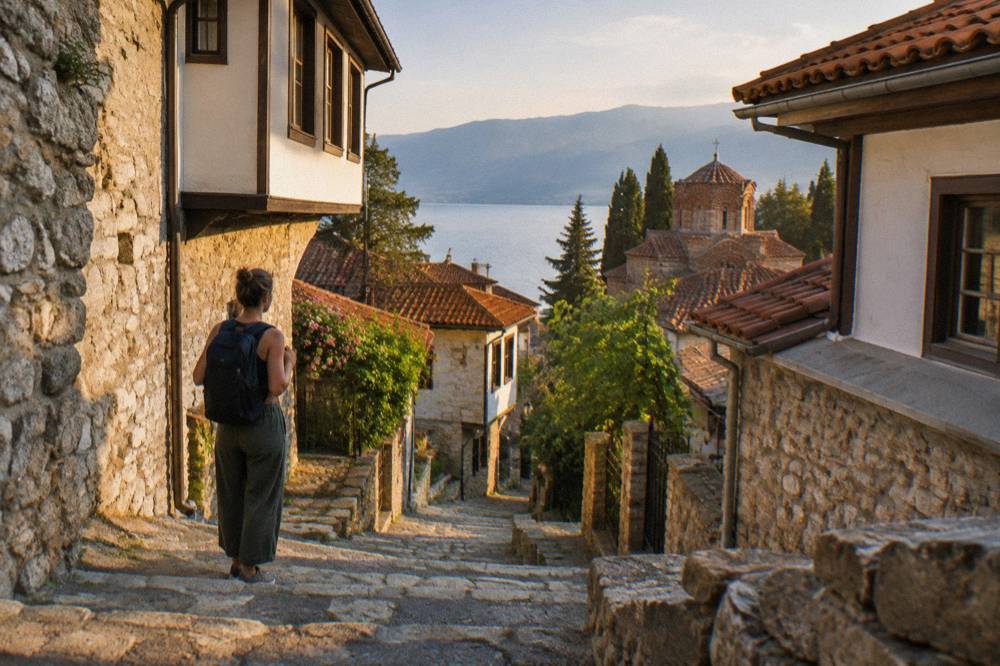
The two tour blocks below are the products that fit solo travel most directly: a self-paced audio walk of the old town, a semi-private day trip that pairs solo travellers with a small group, and a short sunset cruise that needs no companion to enjoy.
What Should LGBTQ Travellers Know About Ohrid?
No official advisory, including the US State Department's Level 1 rating for North Macedonia, carries an LGBTQ-specific warning for Ohrid or the country, and the town's tourism economy treats visitors as visitors. Public affection between same-sex couples draws attention in smaller Balkan towns generally, so discretion in rural areas and ease in tourist settings is the realistic pattern for a visit.
The advisory picture is the verifiable part. The State Department's Level 1 designation applies to all travellers and adds no LGBTQ caution for North Macedonia. The FCDO's North Macedonia pages likewise flag no sexuality-related risk. What official sources do not do is paint a picture of the social climate, and honest planning means separating those two layers: institutional tolerance at the border and in officialdom, and everyday conservatism in a small town whose permanent population numbered 51,428 at the 2021 census.
For practical purposes, an LGBTQ visitor to Ohrid is a tourist in a tourist town. Hotels, restaurants, tour operators and boat crews deal with foreign visitors continuously through a long season, and solo travellers of any identity book the same rooms, tables and cruises. Ohrid's visitor profile is dominated by foreign guests, Germany sent 3,537 of the 11,686 foreign guests recorded in November 2025 alone, and the town's commercial life is built around that flow.
The sensible adjustments are the ones that apply across the region. Discretion with public affection outside clearly tourist spaces costs nothing and avoids friction. Ohrid has no dedicated LGBTQ venues, so nightlife means the general bars and restaurants of the old town and quay, covered on the page about Ohrid's restaurants and food scene. Solo LGBTQ travellers wanting a social anchor will find it through group activities rather than venues: a semi-private day trip, a walking tour, or a wine tasting, all of which create a temporary group of fellow travellers.
How Walkable Is Ohrid Without A Car?
Ohrid is fully walkable for a solo traveller staying in or near the old town: the lanes between the lake, the Old Bazaar, Samuel's Fortress, St Sophia and the Ancient Theatre form one continuous pedestrian network, and the town has no trams or river crossings to complicate it. A car only earns its keep for Galicica National Park, Lake Prespa and the southern shore monasteries.
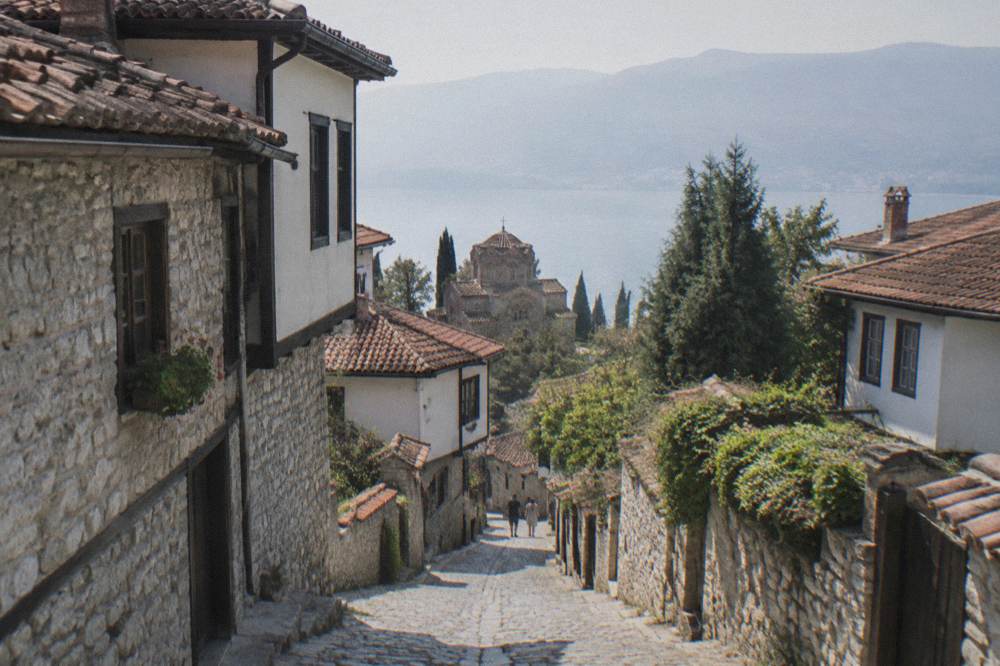
The geography is the whole argument. The old town rises from the lake toward the fortress, and every major sight inside the town, the Ancient Theatre, St Sophia, Plaosnik, the Church of St John at Kaneo district, the Old Bazaar, the Perivleptos and Icon Gallery complex, sits on that slope within walking distance of the harbour. The Ancient Theatre itself is a late Hellenistic structure first excavated in 1935, whose capacity rose to about 5,000 after a later upper section was added, and it sits inside this walkable core.
What walking does not cover, local transport does. Buses link Ohrid with Struga for roughly 100 to 150 MKD one way, though that fare comes from older guides and should be confirmed on the spot. Taxis handle short town rides for modest sums. Lake boats run seasonally from the port toward St Naum, with the full-day cruise offered by operator Boat Armada listed at from 1,200 den for an adult and 600 den for a child, a trip of about seven hours with stops that can include the Bay of Bones. Those boats run about May to October and reduce outside that window.
A solo traveller planning car-free days can also lean on the itineraries for one, two or three days in Ohrid, which sequence the walkable sights in a sensible order.
| Solo transport need | Option | Figure or fact |
|---|---|---|
| Old town sightseeing | On foot | All core sights on one pedestrian network |
| Ohrid to Struga | Local bus | 100 to 150 MKD one way (older guides, confirm locally) |
| Airport to centre | Taxi | Reported 600 to 800 MKD, about EUR 12 |
| Full-day lake cruise to St Naum | Boat Armada seasonal cruise | From 1,200 den adult, 600 den child, about 7 hours |
| Galicica National Park | Car or organised tour | 250 MKD per vehicle entry, no per-passenger fee |
| Entering Galicica on foot | Ohrid-side gate on foot | 100 MKD |
For the park itself, the fee structure is clear: Galicica, North Macedonia's second national park, established in 1958, covers 22,750 ha between Lake Ohrid and Lake Prespa and charges 250 MKD per vehicle with no per-passenger fee, or 100 MKD for someone entering on foot from the Ohrid-side gate. Heavy snow can close the park's main road, typically between January and March. A solo traveller without a car usually reaches the park through an organised jeep or hiking product rather than self-driving.
Where Should Solo Travellers Stay In Ohrid?
Solo travellers do best staying in or immediately around the old town and harbour area of Ohrid, where every evening walk, restaurant and boat departure sits within a few minutes on foot; the trade-off is that old-town streets now carry a resident-only parking regime from summer 2026, which matters only to visitors with a rental car. Budget travellers find hostels and small guesthouses, comfort travellers lakeside hotels.
The parking point is a dated, verifiable fact worth knowing even without a car. From summer 2026, streets in the old part of Ohrid including Ilindenska, Kosta Abrash and Car Samoil became reserved for residents holding a valid sticker, with non-resident vehicles subject to clamping. A solo visitor arriving by rental car should therefore choose accommodation with its own parking outside the restricted streets, or park outside the old core.
Beyond that, the solo-specific logic is simple. Staying central removes the late-evening transfer problem entirely, since dinner on the quay and a room above the old lanes are the same short walk. The detailed neighbourhood-by-neighbourhood breakdown, including the quieter eastern shore settlements like Lagadin and Peshtani, sits on the where to stay in Ohrid page, with budget options on the hostels page. November 2025 data showed 18,103 guests in Ohrid that month, 6,417 domestic and 11,686 foreign, which points to real year-round demand and accommodation that stays open through the shoulder season.
What Can A Solo Traveller Do Alone In Ohrid?
A solo traveller in Ohrid can fill days without a companion: walk the old town's church trail, take the seasonal boat toward St Naum, swim off the town beaches in summer, taste local wine at a monastery winery, and join small-group products, a cooking class, a paddleboarding tour or a guided walk, whenever a temporary group is wanted. Every one of these is bookable for one person.
The walkable core comes first. The museum institute's sites run on a single ticket logic: Robev Family House, the Bay of Bones Museum on Water and the Icon Gallery each charge 150 den for foreign visitors and 120 den for domestic, with a reported child and student rate of 60 den. Their hours differ by site and season, and Mondays are closed days at these museum sites. The Bay of Bones, the reconstructed prehistoric pile settlement at Gradishte near Peshtani, runs a winter schedule from 1 October to 30 April, 09:00 to 15:30, and a summer schedule from 1 May to 30 September, 09:00 to 16:30. St Naum monastery at the lake's southern end charges 150 MKD entrance, with a rowboat ride through the Crn Drim springs at about 5 EUR, per a cruise operator's listing.
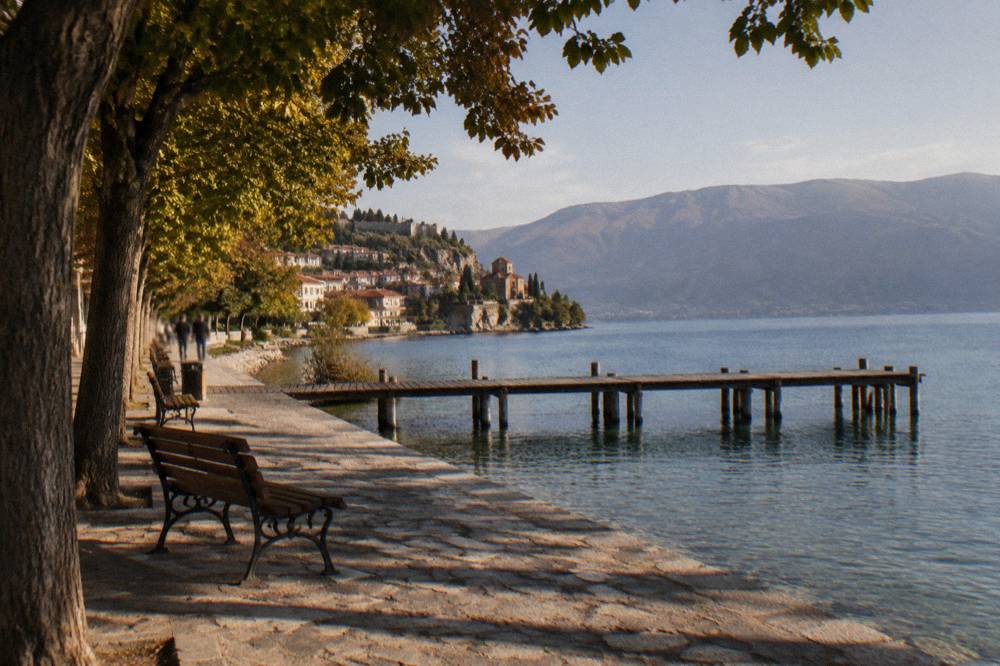
Swimming is a genuine solo activity here. Modelled lake surface temperatures put July at about 22.9 C and August at about 23.5 C, with the swimming season running from July; the UHMR's multi-year October mean is 14.3 C, which tells you when the water stops being inviting. 2026 bathing tests by the Institute of Public Health found Class I physico-chemical quality at most points, with most microbiological samples rated Excellent, though Grashnica beach rated Class III and is the one to skip.
| Solo activity | What it involves | Sourced figure |
|---|---|---|
| Museum institute sites | Robev House, Icon Gallery, Bay of Bones | 150 den foreign, 120 den domestic per site |
| St Naum monastery visit | Monastery and Crn Drim springs rowboat | 150 MKD entry, about 5 EUR rowboat |
| Full-day lake boat to St Naum | Seasonal, about 7 hours, Boat Armada | From 1,200 den adult, 600 den child |
| Swimming off town beaches | July to September comfort window | Modelled July surface about 22.9 C |
| Galicica viewpoint drive or tour | Park between the two lakes | 250 MKD per vehicle, 100 MKD on foot |
| Small-group day trip | Temporary group for a solo traveller | Prices render on the tour listings |
The audio tour below is the most solo-friendly product on this site's roster: a self-guided walk of the old town that one person takes entirely at their own pace, with no group to keep up with.
Wine deserves a paragraph of its own, because tastings are the classic solo icebreaker. Ohrid's winery tasting experiences, including the monastery winery tours, run as small seated groups where a lone visitor is unremarkable. Macedonian wine and rakija have their own food and drink pages, and the tasting products themselves carry live prices on their listings.
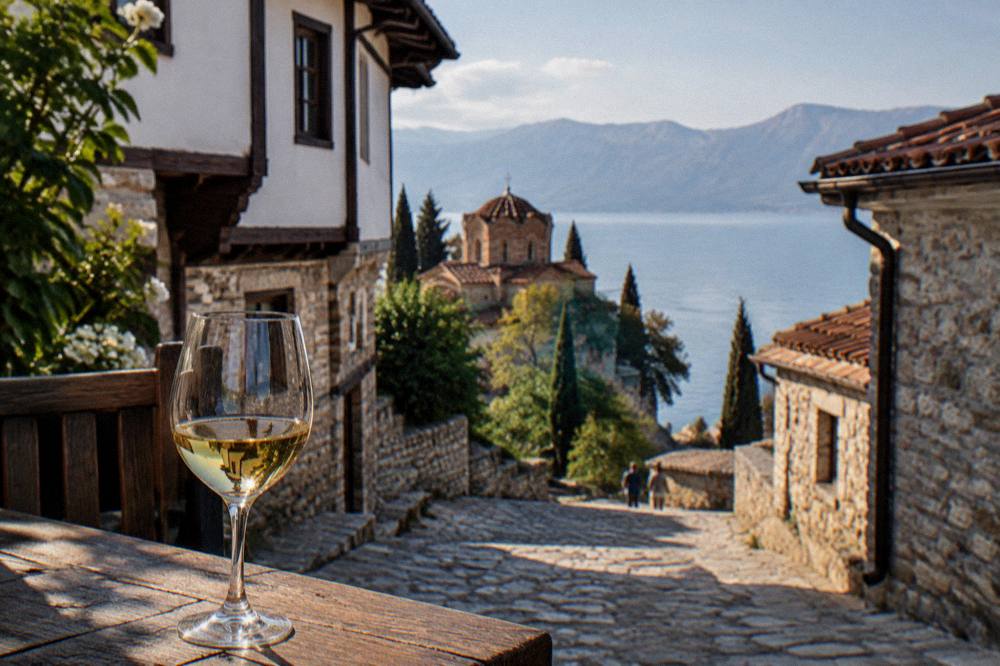
For orientation on a first solo day, the one-day Ohrid itinerary sequences the old town walk; anyone wanting a narrated version can Check availability for the self-guided audio tour that covers the same lanes with commentary.
How Much Does A Solo Trip To Ohrid Cost?
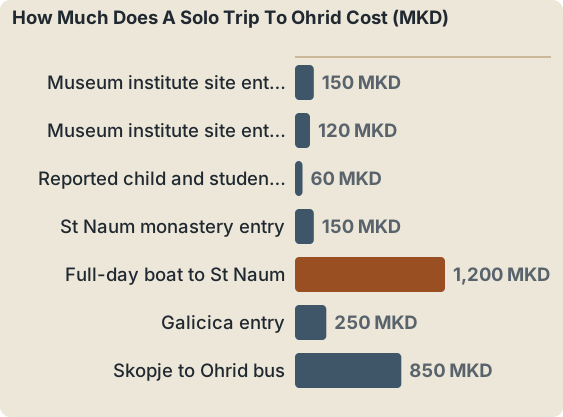
A solo traveller pays per-person Ohrid costs that stack up low by European standards: museum sites at 150 den each, a full-day lake cruise from 1,200 den, local buses at 100 to 150 den a ride, and food and wine at Balkan prices, with the denar (MKD) as local currency, de facto pegged to the euro, and a National Bank middle rate on 19 October 2026 of 61.6633 MKD to 1 EUR.
The currency mechanics matter more for a solo traveller because there is no companion to split cash withdrawals with. The denar is the local currency and euros are not legal tender, though they are sometimes accepted informally in tourist areas at unfavourable rates; ATMs are widely available for MKD withdrawals. The National Bank of the Republic of North Macedonia targets the denar's rate against the euro, which keeps conversions stable, and the published middle rate on 19 October 2026 was 1 EUR = 61.6633 MKD. The full money picture, including card and cash strategy, is on the denar and money guide.
| Typical solo cost | Amount | Source note |
|---|---|---|
| Museum institute site entry (foreign adult) | 150 den | Institute and Museum Ohrid ticket page |
| Museum institute site entry (domestic) | 120 den | Institute and Museum Ohrid ticket page |
| Reported child and student rate | 60 den | Reported on the institute's page |
| St Naum monastery entry | 150 MKD | Cruise operator listing |
| Springs rowboat at St Naum | About 5 EUR | Cruise operator listing |
| Full-day boat to St Naum | From 1,200 den adult, 600 den child | Boat Armada listing |
| Galicica entry | 250 MKD per vehicle, 100 MKD on foot | Park guide |
| Skopje to Ohrid bus | 850 to 950 MKD one way | Route guide |
| Tirana to Ohrid minibus | About EUR 15 to 20 | Route guide |
Getting there is a solo budget line of its own. From Skopje, about 170 km away, buses take about 3 hours and cost 850 to 950 MKD one way; there is no passenger train to Ohrid and no domestic flight. From Tirana, minibuses run roughly 5 to 7 times a day, take 3 to 3.5 hours including the border, and cost about EUR 15 to 20. Both routes have dedicated pages, Skopje to Ohrid and Tirana to Ohrid, and the budget overview lives on the cost and budget guide.
How Do Solo Travellers Meet People In Ohrid?
Solo travellers meet people in Ohrid through shared activities rather than dedicated venues: small-group walking tours, wine tastings, cooking classes, boat cruises and day trips all assemble temporary groups of visitors, and the summer festival calendar adds public events from late June through August that anyone can attend alone.
The festival layer is the most underused social tool here. The 66th Ohrid Summer Festival ran 12 July to 20 August 2026, opening with a gala at the Ancient Theatre, with St Sophia among its traditional venues. The 65th Balkan Festival of Folk Songs and Dances followed on 3 to 6 July 2026 at the Grigor Prlichev cultural centre. The Ohrid Water Festival ran 12 to 30 August 2026, including the 25 km swimming marathon from St Naum to Ohrid harbour on 22 August and a separate 33 km stand-up paddle marathon around the lake on 26 August.
| 2026 event | Dates | Solo-friendly angle |
|---|---|---|
| 65th Struga Poetry Evenings (nearby Struga) | 24 to 29 June 2026 | Public poetry programme, day trip from Ohrid |
| 65th Balkan Festival of Folk Songs and Dances | 3 to 6 July 2026 | Ticketed folk performances in Ohrid |
| 66th Ohrid Summer Festival | 12 July to 20 August 2026 | Open-air performances at the Ancient Theatre |
| Ohrid Swimming Marathon | 22 August 2026 | 25 km St Naum to Ohrid harbour, spectator event |
| SUP marathon around the lake | 26 August 2026 | 33 km paddle event, part of the Water Festival |
The commercial layer works just as well. A semi-private day trip to Ohrid and Struga assembles a handful of travellers in one vehicle. A sunset cruise fills an hour on the water with a boatload of fellow visitors. Cooking classes and wine tastings seat individuals around shared tables. None of these requires arriving as a pair, and each ends the day with acquaintances rather than solitude. The two picks below are the strongest social options: the semi-private trip that builds a small group for the day, and the sunset cruise that turns an evening on the lake into a shared one.
What Should Solo Travellers Know About Entry, Registration And Practicalities?
Visa-free nationals can stay in North Macedonia up to 90 days in any 180-day period, UK visitors up to 3 months, and every foreign visitor must be registered with the local police within 48 hours of arrival, a task hotels carry out automatically for their guests; North Macedonia is not in the EU or Schengen, so EU roaming rules do not apply, and the denar is the currency you will actually spend.
These are the facts a solo traveller cannot delegate to a companion. The 90-days-in-180 rule for visa-free nationals, including US, EU, Canadian and Australian citizens, comes from the Macedonian foreign ministry's entry information; UK rules allow a visit of up to 3 months without a visa, with passport expiry at least 90 days after arrival. Holders of valid multiple-entry UK, US or Canadian visas or Schengen residence permits can enter for up to 15 days. Registration within 48 hours is handled by accommodation providers, which makes independent arrivals the one case to be aware of it.
North Macedonia is not in the EU and not in Schengen, which means border checks on every entry, including from Albania at the Sveti Naum / Tushemisht crossing, reported to operate around the clock, with the St Naum monastery about 4 km from that border. Bulgaria and Romania have been full Schengen members since 1 January 2025, so a Balkan itinerary crossing those borders moves without checks, but entering North Macedonia always means a passport line. The full entry breakdown is on the visa and entry guide, and the current safety question for North Macedonia has its own answer page.
Two more practicalities close the list. Tap water in Ohrid is generally reported drinkable from the municipal supply. And the lake's own rules changed for 2026: a government decision of 2 June 2026 banned jet skis on the lake between 1 July and 31 August from 11:00 to 19:00, and restricted boat traffic at night through the summer and into October, measures aimed at swimmer safety that also shape what the water looks and sounds like in high season.
When Is The Best Time For A Solo Trip To Ohrid?
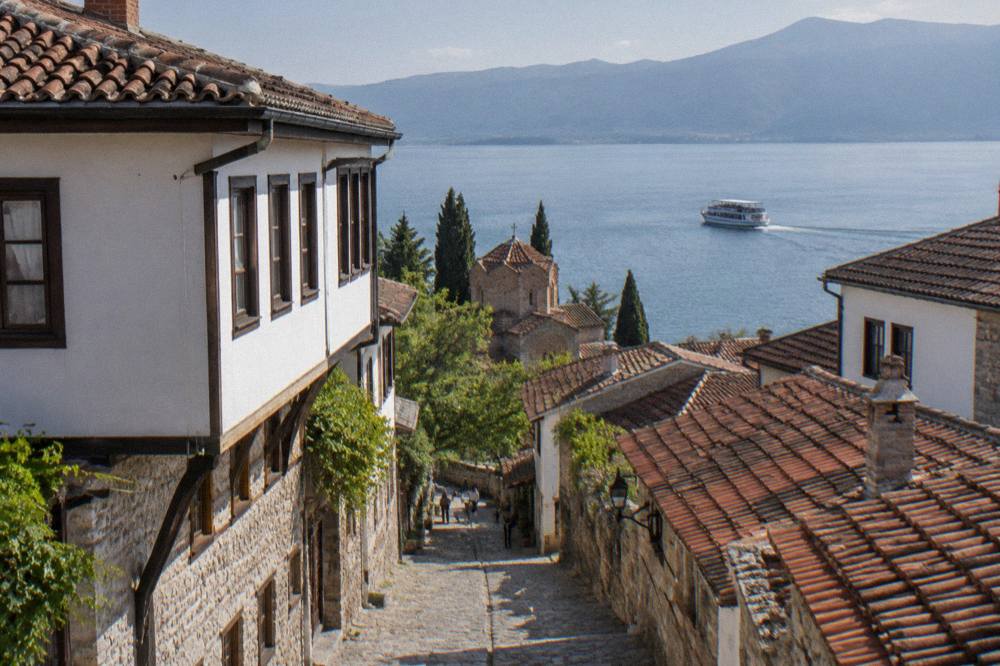
July and August suit solo travellers who want swimming, boats and festival evenings, with modelled lake surface temperatures around 22.9 to 23.5 C and the Ohrid Summer Festival running mid-July to 20 August; May, June and September trade some water warmth for thinner crowds, while November to March means museum winter hours, reduced boat service and cold, wet weather.
The climate numbers are modelled ERA5 reanalysis normals for 1991 to 2020, not a station record, and they frame the choice plainly. July averages a mean daily high of 27.1 C against 18.3 C overnight lows, with 34.7 mm of rain; August is warmer still at 27.6 C and 19.0 C with 32.9 mm of rain. June sits at 24.2 C and 15.2 C. September cools to 22.4 C with 62.4 mm of rain, and November brings 11.5 C highs and 90.4 mm of rain.
| Month | Mean daily high C | Mean daily low C | Rain mm | Solo traveller's read |
|---|---|---|---|---|
| May | 19.5 | 10.8 | 70.8 | Comfortable walking, cool water |
| June | 24.2 | 15.2 | 43.1 | Season starting, boats running |
| July | 27.1 | 18.3 | 34.7 | Peak season, festival month |
| August | 27.6 | 19.0 | 32.9 | Busiest month, warmest water |
| September | 22.4 | 14.9 | 62.4 | Quieter, water still swimmable early month |
| November | 11.5 | 5.3 | 90.4 | Winter museum hours, few boats |
For a solo traveller the August trade-off is real: the busiest month means full boats, full events and full terraces, which helps anyone travelling alone who wants company around, while June and September keep the infrastructure running with more space. Winter has its own case, the winter Ohrid guide covers it, but a solo visitor should plan around museum winter schedules, which run from 1 October to 30 April, and Monday closures at the institute's sites. The month-by-month climate detail is on the Ohrid weather page.
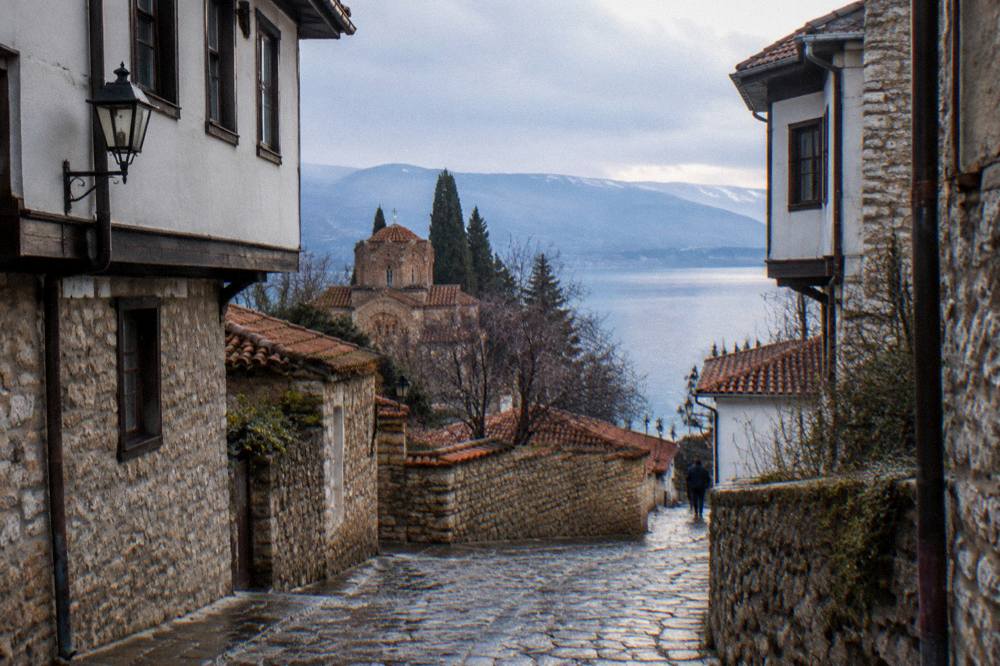
Before the closing questions, one last set of picks for the solo traveller who wants the three products most shaped to travelling alone: the self-guided audio walk, the semi-private day trip and the short sunset cruise.
The sunset cruise earns its solo spot on its own terms: a short evening trip on the lake from the harbour, bookable for one, with the town's skyline and the fortress slope as the backdrop.
Common Questions About Solo, Female And LGBTQ Travel In Ohrid
Is Ohrid safe for solo female travellers?
The US State Department rates North Macedonia at Level 1, Exercise Normal Precautions, with no women-specific warning, and Ohrid's compact old town keeps evening walks short. Standard solo precautions, agreed taxi fares and a charged phone, cover the situation. Police are reached on 192 and ambulance on 194.
Is Ohrid LGBTQ friendly?
Official advisories carry no LGBTQ-specific warning for North Macedonia, and Ohrid's visitor economy treats tourists as tourists. The town has no dedicated LGBTQ venues, so social life runs through general bars, group tours and festival events, and discretion with public affection outside tourist spaces is the practical norm for the region.
Can you visit Ohrid without a car?
Yes. The old town, the main churches, the fortress area and the quay form one walkable network, buses link Ohrid with Struga, and seasonal boats run from the port toward St Naum. A car helps mainly for Galicica National Park and Lake Prespa.
What is the emergency number in Ohrid?
The numbers confirmed on UK government advice for North Macedonia are ambulance 194, police 192 and roadside assistance 196.
Is Ohrid good for solo travellers in winter?
It works, with adjustments: museum sites run winter schedules from 1 October to 30 April and close on Mondays, lake boats reduce or stop outside roughly May to October, and November averages a mean daily high of 11.5 C with 90.4 mm of rain. Crowds thin out and accommodation costs ease.
Do solo travellers need to register with police in Ohrid?
Foreign visitors register with the local police within 48 hours of arrival, and hotels do this automatically for their guests. Anyone staying in private accommodation should confirm the host handles it.