Ohrid SIM Cards, ESIM And WiFi
Staying connected in Ohrid means understanding one unusual detail: North Macedonia is not in the EU, so the roaming rules that cover most of Europe stop at the border. This guide sets out the networks, the eSIM and roaming situation, and how WiFi works in the lakeside old town.
Short answer
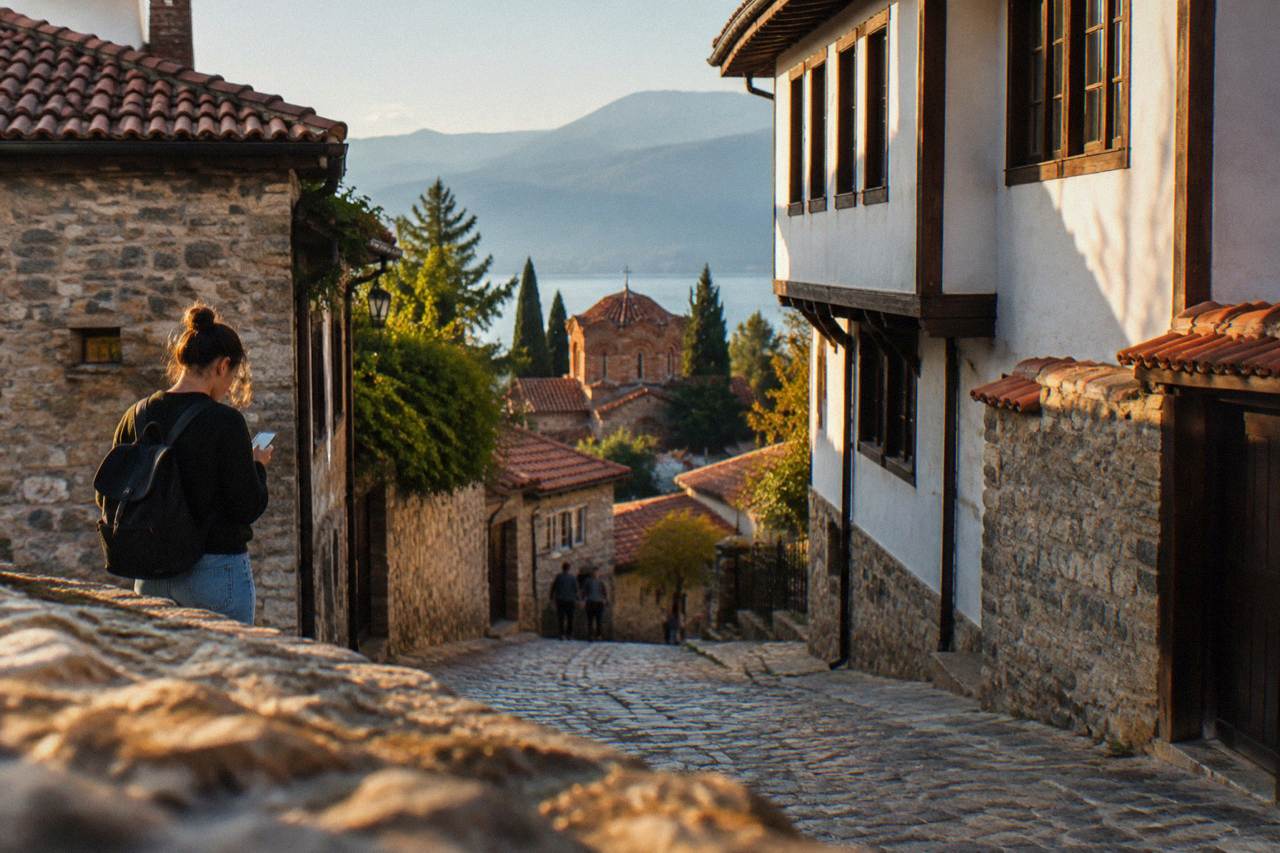
Ohrid is served by North Macedonia's national mobile networks, including A1 Macedonia and Makedonski Telekom. EU roam-like-at-home rules do not apply, so visitors from the EU need either an active roaming add-on, a travel eSIM, or a local SIM. WiFi is standard in hotels and guesthouses across the old town.
Ohrid sits on Lake Ohrid, a freshwater mountain lake at about 693 m above sea level in North Macedonia, and its old town is a web of stone lanes where a phone doubles as map, camera and ticket counter. The Ohrid Travel Guide sets out here what a visitor actually needs to know about SIM cards, eSIM profiles and WiFi in the town. The single most important fact comes first: North Macedonia is not in the EU and not in Schengen, so the roam-like-at-home arrangement that EU travellers rely on at home does not apply. Everything else, from which networks operate to how you pay in denars, follows from that.
The town itself is small enough that connectivity rarely becomes a daily problem. The lanes climb from the lake shore toward Samuel's Fortress, the Old Bazaar sits at the heart of the commercial streets, and the whole walkable core can be crossed on foot in well under an hour. What pushes visitors toward mobile data is not the town but its surroundings: the lake shore road toward St Naum, the border with Albania a short drive away, and the long corridor back to Skopje. A phone that works on the road turns those trips from a logistics exercise into a simple outing.
What Are The Options For Getting Online In Ohrid?
A visitor in Ohrid has four realistic ways to stay online: a travel eSIM installed before arrival, roaming on a home operator with an active add-on, a local physical SIM bought in North Macedonia, or relying on the WiFi found in hotels, guesthouses and cafes around the old town. Each suits a different kind of trip. A weekend visitor using maps and messaging can live on WiFi alone. A longer stay, or a trip that includes day trips to St Naum, Struga or across the Albanian border, argues for a data connection that works on the road.
Prefer to have data sorted before you arrive? Book a travel eSIM here.
The choice also depends on how you arrive. Ohrid's own airport is about 10 km from the centre, and arrivals there can be in town quickly; a travel eSIM activated on the plane removes any errand from day one. Visitors arriving by bus from Skopje, a journey of about 170 km, land at the bus station east of the centre, with shops and kiosks between there and the old town. Arrivals from Tirana come through the Qafe Thane or Kjafasan border crossings, and anyone crossing a land border with North Macedonia should expect the roaming terms on their phone to change at the frontier line.
A useful way to frame the decision is by trip length. For two or three days anchored in the old town, hotel WiFi plus offline maps covers nearly everything, and the money saved can go toward a boat cruise or a guided walk. For a week that mixes Ohrid with Struga, Galicica National Park, Lake Prespa or an Albanian leg through Pogradec, a data connection earns its cost quickly, both for navigation and for checking opening details on the road.

Planning the practical side of an Ohrid trip usually runs alongside questions of money and timing. The denar and money guide explains the local currency, and the best time to visit guide helps place a visit in the right season. The Ohrid cost and budget guide puts connectivity spending in the context of everything else a trip costs.
Which Mobile Networks Operate In Ohrid?
Ohrid is covered by North Macedonia's national mobile networks, of which the two named in the country's practical literature are A1 Macedonia and Makedonski Telekom, and a phone bought abroad will generally attach to one of these networks the moment roaming is switched on. The operators are established national carriers, not small regional ventures, and both sell prepaid products in their own shops. For a visitor, the practical point is simpler: any unlocked phone can use a local SIM from these networks, and any eSIM that lists North Macedonia as a destination is riding on the same national infrastructure.
| Network | Status in North Macedonia | What a visitor uses it for |
|---|---|---|
| A1 Macedonia | National operator | Local prepaid SIM, roaming partner for foreign operators |
| Makedonski Telekom | National operator | Local prepaid SIM, roaming partner for foreign operators |
North Macedonia also participates in the Western Balkans roaming agreements, which matter to visitors arriving from neighbouring countries: those arrangements reduce roaming costs within the region, but they are not the EU's roam-like-at-home system and the two should not be confused. A traveller crossing from Albania or from another Western Balkans country should check with their home operator what the regional agreement covers, because the terms differ from EU roaming and change periodically.
The distinction matters most for multi-country itineraries. A route that strings together Tirana, Ohrid and Skopje crosses at least two borders, and a single eSIM or roaming add-on that names every country on the route beats a collection of country-specific SIMs bought at each frontier. Conversely, a visitor whose trip begins and ends in Ohrid with no border crossing has the simplest decision of all: one local SIM or one country-listed eSIM, and nothing else to think about for the stay.
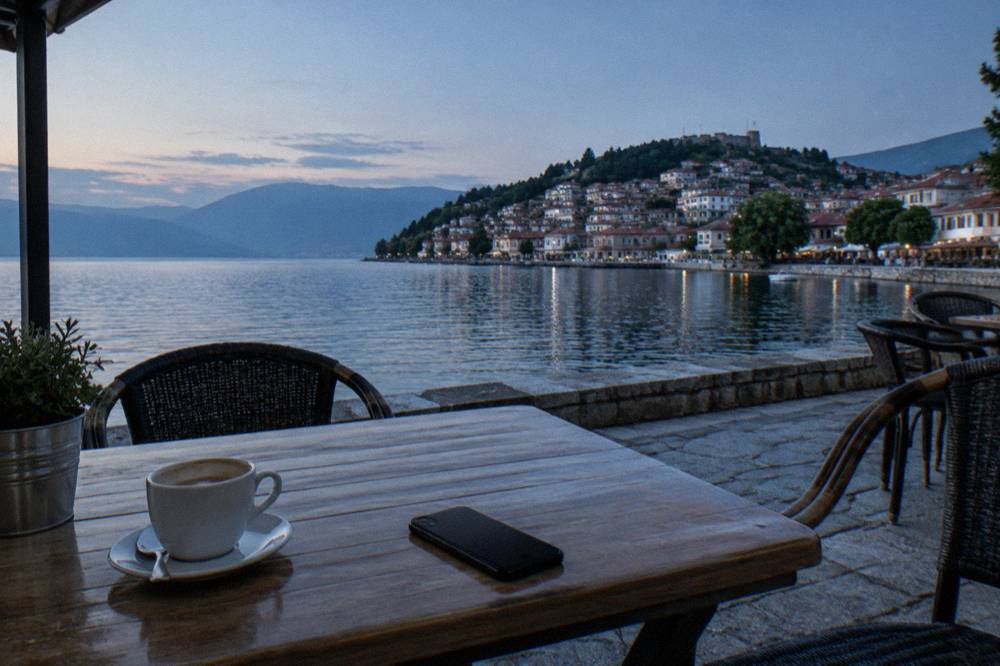
Once connected, the practical uses pile up fast. Navigation between the old town, the lake shore and the villages along it, translation help with Macedonian's Cyrillic signage, and looking up the details in the how to get to Ohrid guide all run better on a live data connection. Guided products are the other way to remove the navigation burden entirely: a small-group old town walk leaves the route-finding to a local guide, and it pairs naturally with a first day of orientation. Check availability for the walk, and read the old town walking tour guide for what a guided route covers.
How Do ESIM And Roaming Work In North Macedonia?
Because North Macedonia is outside the EU, EU roam-like-at-home rules do not apply there, and a visitor's phone will not simply continue on domestic EU terms: eSIM profiles that list North Macedonia as a covered destination work normally, while classic roaming depends entirely on the add-on a home operator sells for the country. That is the whole game in one paragraph. Travellers from the EU who cross from Greece, Bulgaria or Albania into North Macedonia can find their normal EU terms stop at the border. Travellers from the UK, US or further afield were never on EU terms to begin with and need their operator's own roaming package or a travel eSIM.
The eSIM route has a practical advantage beyond price: it can be bought and installed before the trip, and it activates on arrival without a shop visit. Phones that do not support eSIM, or travellers who prefer a local number, fall back on the physical SIM route described in the next section. Both approaches end up on the same national networks described above.
A detail worth checking before departure concerns the phone itself rather than the network. A handset locked to a home operator will refuse a foreign SIM, eSIM or physical, and unlocking is a conversation to have with the home operator weeks before travel, not at the airport. Dual-SIM phones have made the hybrid strategy popular: keep the home number active for calls and texts on roaming terms, and run data on a second line, whether a local SIM or an eSIM profile, so the two functions never compete.
| Connection method | Works from arrival day? | Key thing to check before travel |
|---|---|---|
| Travel eSIM | Yes, if installed before departure | North Macedonia is listed as a covered country |
| Roaming on home operator | Yes, if activated | The add-on specifically includes North Macedonia |
| Local physical SIM | After purchase in North Macedonia | Phone is unlocked for other networks |
| WiFi only | In hotels, guesthouses and cafes | Offline maps downloaded before arrival |
One reassurance for anyone comparing guided options while sorting out connectivity: bookable products in Ohrid come with standard cancellation terms, so a day trip or a boat cruise can be reserved before the trip and adjusted later. That matters for travellers who prefer to plan the itinerary first and solve the data question on the ground, since the two schedules no longer depend on each other.
Where Can You Buy A SIM Card In Ohrid?
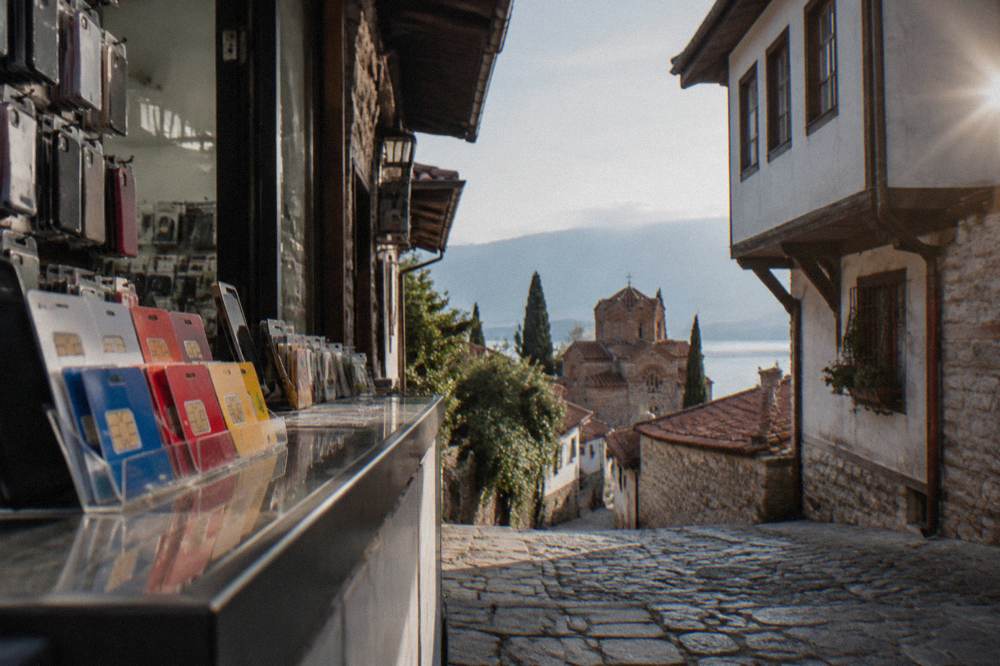
A local SIM card in Ohrid is bought from the network operators' own shops and from phone and kiosk retailers around the town, with registration of the buyer's identity as part of the purchase, as is normal for prepaid SIMs in the Western Balkans. The old town and the streets around it hold the bulk of the retail, and the airport, about 10 km west of the centre, is another point of arrival where connectivity is the first errand of the trip. A passport is the standard document to carry for a SIM purchase anywhere in North Macedonia.
The practical sequence for a visitor is short: check the phone is unlocked, bring the passport, buy in a shop rather than an informal kiosk where registration support matters, and keep the receipt. Anyone planning day trips along the lake should test the SIM on a short walk first, in the lanes between the Old Bazaar and the lake shore, before setting off further. Top-ups extend the life of a prepaid plan and are sold in the same retail channels, so the shop where the SIM was bought is usually the place to return to when the data runs low.
Timing the purchase also has a seasonal angle. The main visitor season runs roughly June to September, with August the busiest month, and shops in a tourist town are geared up for foreign buyers through that window. Outside the season the same shops serve locals, and the process is no harder, only slower if a translation is needed. Either way, the whole errand rarely takes more than a single short visit.
How Good Is WiFi In Ohrid Hotels And Cafes?
WiFi is a standard feature of hotels and guesthouses across Ohrid, from the old town to the lake shore, and cafe WiFi in the town is common enough that a WiFi-only strategy works for a visitor whose day is built around meals and guided activities rather than independent navigation. As with any lakeside town of stone buildings, the experience varies by building: thick old walls in the old town can weaken a signal between floors, and a room at the top of the climb toward Samuel's Fortress can behave differently from one at the lakeside.
The honest planning advice is to treat hotel WiFi as the backbone and mobile data as the fallback. Download offline maps of Ohrid and the lake before arrival, since map tiles need no connection once stored. Anyone relying on WiFi for evening planning should also keep a charged phone for the walk home through lanes that are steep and unlit in places. A portable battery is the accessory that earns its place fastest in Ohrid, because a day of photography, navigation and translation drains a phone faster than a day at home does.
Guesthouses in the old town add one more consideration: the hosts. A small guesthouse answers a WiFi question directly, in a way a large booking platform cannot, and asking about signal strength in the specific room is a reasonable pre-arrival question. The where to stay in Ohrid guide maps out the neighbourhoods, from the old town itself to the lakeside stretches toward Lagadin and Peshtani, and connectivity expectations shift with each of them.
| Situation in Ohrid | WiFi-only workable? | What improves it |
|---|---|---|
| Staying in the old town, guided days | Yes for most needs | Offline maps downloaded before arrival |
| Independent day trips along the lake | Patchy | eSIM or local SIM for the road |
| Working remotely from a guesthouse | Depends on the property | Ask the host about speed before booking |
| Border crossings to Albania or long bus rides | No | Roaming add-on or travel eSIM |
Is Mobile Coverage Reliable Around Lake Ohrid And On Day Trips?
Coverage around Ohrid follows the road network: the town itself, the shore road toward St Naum, the route to Struga and the main corridors toward Skopje and the Albanian border crossings are the served spine of the region, while the same physics that applies everywhere, terrain and distance, applies on a mountain lake shore at about 693 m above sea level. A visitor heading to Galicica National Park between Lake Ohrid and Lake Prespa climbs well above the lake, and mountain terrain is where any network's signal thins out, in North Macedonia as everywhere else.
The day trips that matter for connectivity planning are the long ones. A trip that starts in Tirana and crosses into North Macedonia spends hours in border and mountain territory, and the same goes for the Skopje corridor. Boat trips along the lake, including the full-day cruises toward St Naum and the Bay of Bones, keep the shore in sight for much of the route, which is generally the better environment for a signal, though nobody should plan a video call from the middle of a lake.
The border itself deserves a sentence of its own. The Sveti Naum and Tushemisht crossing near the Albanian frontier lies about 4 km from St Naum, and walkers sometimes cross between the two posts on foot. A phone that switches networks automatically at the frontier can generate unexpected roaming charges in the minutes around a crossing, so a traveller on a tight budget switches data off, or to airplane mode, just before the border and back on once the day's country is settled.

Guided day products remove most of the planning load. The St Naum tour from Ohrid guide and the Ohrid boat tour guide cover the two classic lake excursions, and both work with or without mobile data, since the guide handles the logistics.
What Should You Know About Data, Maps And Apps In Ohrid?
The apps that matter in Ohrid are the universal ones, mapping, translation and messaging, and the one local quirk worth knowing is language: Macedonian uses the Cyrillic alphabet primarily, with Latin script also in use, so a translation app with camera support turns street signs and menus into readable text faster than any phrasebook. Offline map support matters more here than in a flat capital, because the old town climbs steeply from the lake and small lanes branch off the main routes.
A second quirk is administrative rather than linguistic. North Macedonia is not in the EU, and visitors register with the local police within 48 hours of arrival, a formality hotels normally handle for guests. Nothing about connectivity is involved in that process, but arriving visitors with working phones sometimes assume EU-style systems apply broadly, and the registration rule is a useful reminder that the country runs its own procedures. The North Macedonia visa and entry guide covers the entry side in full.
Downloads are the third pillar. Offline maps, downloaded translation packs for Macedonian, saved tickets and confirmation pages, and a handful of offline articles about the sights all make a WiFi-only phone nearly as capable as a connected one for the core needs of a day in Ohrid. The lake and the churches photograph beautifully and nobody needs a connection to enjoy them; the connection earns its keep on the road between them.

For calls home, internet-based calling over WiFi or data is the standard approach, and the Ohrid travel tips guide collects this among the other practicalities of a stay.
How Does Paying For Connectivity Work With Denars?
A local SIM in Ohrid is paid for in Macedonian denars, the country's currency, which the National Bank pegs in practice to the euro, with the published middle rate on 19 October 2026 at 61.6633 denars to one euro, and euros themselves are not legal tender in North Macedonia even though they are informally quoted in tourist settings. That combination matters when topping up a prepaid plan, because the top-up vouchers and shop prices are denominated in denars, while a visitor's mental arithmetic probably runs in euros.
The honest summary of the whole page: connectivity in Ohrid is easy once the non-EU detail is absorbed. Bring an eSIM or a roaming add-on that names the country, or buy a local SIM with a passport in town, and lean on hotel WiFi in between. The money side follows the same rule as everything else in the country: pay in denars, and check the denar and money guide for how the currency works.
The numbers below are the ones a connected visitor actually dials or divides by. Emergency numbers in North Macedonia are short and worth memorising rather than storing in a phone that might be the thing that needs replacing, and the distances set expectations for how far a day's travel runs from the old town.
| Practical number in Ohrid | Figure |
|---|---|
| Middle rate, 19 October 2026 | 1 EUR = 61.6633 MKD |
| Police emergency number | 192 |
| Ambulance emergency number | 194 |
| Roadside assistance | 196 |
| Airport distance from centre | about 10 km |
| Skopje distance by road | about 170 km |
Does Staying Connected Change How You Should Plan An Ohrid Trip?
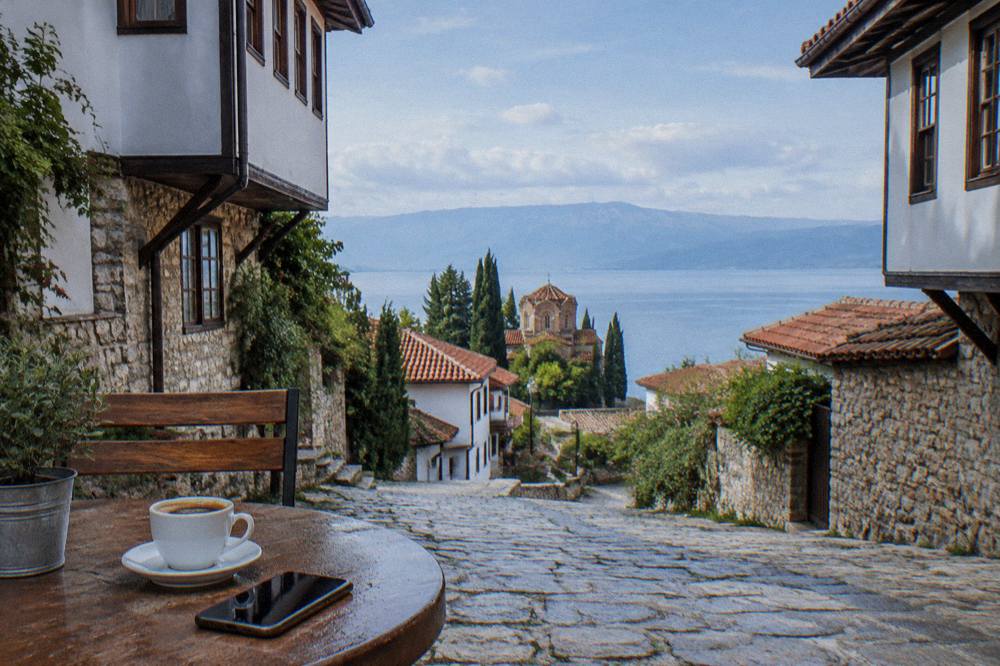
Connectivity planning in Ohrid changes the shape of a trip only at the edges: the sights, the lake and the old town work exactly the same with or without data, but independent day trips, border crossings and self-guided navigation all get easier with a working connection, so the sensible order is to sort the eSIM or SIM on day one and then forget about it. The town itself is compact and walkable, and the classic first activity, a guided walk of the old town with a small group, needs nothing from your phone but a camera.
A connected phone also widens the dining and drinking options, since the Ohrid restaurants guide and the Ohrid food guide are easiest to consult in the moment, standing in a lane and deciding between two dinner options. The rest of the itinerary stack is covered elsewhere on this site: the how many days in Ohrid guide for trip length, and the things to do overview for the full catalogue of activities on the lake and in the old town. Guided products handle transport and timing on the road, which is precisely where connectivity is weakest.
Common Questions About Ohrid SIM Cards And WiFi
Does EU roaming work in Ohrid?
No. North Macedonia is not in the EU and not in Schengen, so EU roam-like-at-home rules do not apply. Visitors need a roaming add-on that names North Macedonia, a travel eSIM that covers the country, or a local SIM. North Macedonia does participate in Western Balkans roaming agreements, which help visitors from neighbouring countries, but those terms differ from EU roaming and should be checked with the home operator.
Which mobile networks operate in Ohrid?
Ohrid is served by North Macedonia's national mobile networks, including A1 Macedonia and Makedonski Telekom. Both sell prepaid products in their own shops, and foreign phones roam onto the same infrastructure. Any eSIM listing North Macedonia as a covered destination rides on the same national networks.
Can I buy a SIM card in Ohrid?
Yes. SIM cards are sold in network operators' shops and phone retailers around the town, with the buyer's identity registered at purchase, so carry a passport. The airport, about 10 km from the centre, is another arrival point where this errand comes up. Top-ups for prepaid plans are sold in the same retail channels.
Is there WiFi in Ohrid hotels?
WiFi is a standard feature of hotels and guesthouses across Ohrid, including the old town. Signal strength varies with the building, and thick stone walls in the old town can affect coverage between floors. Asking a guesthouse host about signal in the specific room is a reasonable pre-arrival question.
Do I need data for day trips from Ohrid?
It helps. Independent trips along the lake, border crossings to Albania and the long corridor to Skopje are easier with mobile data, though guided day products handle navigation and logistics without it. Mountain terrain in Galicica National Park thins any network's signal, so downloads should be made before setting off upward.
Can I pay for a SIM with euros in Ohrid?
The local currency is the Macedonian denar, and euros are not legal tender in North Macedonia, though they are informally quoted in tourist settings. Pay for SIM products and top-ups in denars; the National Bank's published middle rate on 19 October 2026 was 61.6633 denars to one euro.